Best Computerized Plasma Cutter for Global Buyers?
Choosing the best computerized plasma cutter for global buyers requires more than comparing amperage and advertised cutting speed. Real performance depends on material thickness, duty cycle, torch control, software stability, and local service support. A machine that cuts clean 20-millimeter steel in a showroom may struggle during an eight-hour production shift.
Industry data supports this careful approach. Grand View Research’s 2024 Plasma Cutting Machine Market report identifies automation, higher productivity, and digitally controlled fabrication as major market drivers. MarketsandMarkets also highlights growing demand for CNC cutting systems across metal fabrication, automotive, construction, and general manufacturing. These findings suggest that a computerized plasma cutter should be judged as a complete production system, not merely as a power source.
Look beyond the brochure.
From practical evaluation, buyers should check arc-start reliability, consumable availability, nesting software compatibility, cutting-table accuracy, and voltage requirements. The machine should also support documented safety procedures and suitable operator training. ISO 9013 provides useful guidance for evaluating thermal-cut edge quality, while OSHA safety guidance emphasizes ventilation, electrical protection, and control of metal fumes. These references strengthen a purchasing decision, but they do not replace hands-on testing.
Some published specifications remain optimistic. This is worth questioning. Cutting speed can fall sharply with warped plate, poor grounding, worn electrodes, or unstable air pressure. Therefore, global buyers should request sample cuts, energy data, warranty terms, and service-response commitments before choosing a supplier. The best computerized plasma cutter is not always the fastest model. It is the machine that delivers repeatable quality, manageable operating costs, and dependable support in the buyer’s actual working environment.
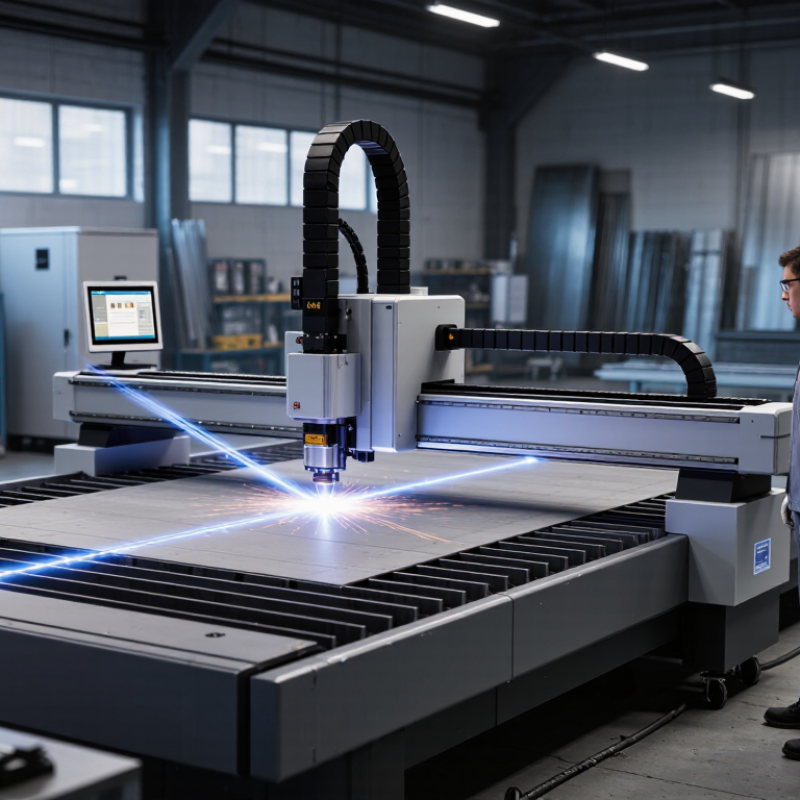
Defining CNC Plasma Cutting: 1–80 mm Steel Capacity for Global Buyers
Best Computerized Plasma Cutter for Global Buyers?
Defining CNC plasma cutting starts with the steel range: 1–80 mm is a working capacity, not a universal guarantee. A computerized plasma cutter follows digital toolpaths, controls torch height, and adjusts cutting speed through programmed settings. Thin 1 mm sheet needs stable arc control and a small nozzle. Thick 80 mm plate demands higher power, suitable gas flow, and slower movement. Cut quality matters.
In workshop evaluations, the advertised maximum thickness often produces a rougher edge and more dross. That is not enough. Buyers should request test cuts at their actual thicknesses, especially near 40–80 mm. Examine the kerf, bevel angle, piercing time, and underside residue. A clean 20 mm cut may be more valuable than a slow 80 mm separation cut.
Global buyers also need practical proof beyond specifications. Confirm input voltage, frequency, compressed-air requirements, software compatibility, and metric drawing support. Ask for maintenance schedules, consumable dimensions, safety instructions, and service response times. Documentation should be clear enough for operators who speak different languages. Export packaging must protect the gantry, torch, and control cabinet from moisture and impact. A small oversight can stop production. Even experienced buyers should question whether the stated 1–80 mm range matches daily production, material type, and required edge quality.
Best Computerized Plasma Cutter for Global Buyers
Typical CNC plasma cutting capacity for carbon steel by nominal plasma output class. The chart illustrates the practical thickness range from approximately 1 mm up to 80 mm.
Actual results depend on amperage, torch technology, cutting speed, material grade, gas selection, edge quality requirements, and machine configuration. Heavy-duty capacity is generally intended for separation cutting rather than continuous precision production.
Comparing Cutting Quality Through ISO 9013 Classes 1–5
For global buyers, the best computerized plasma cutter is not defined by speed alone.
ISO 9013 offers a practical way to compare cutting quality. Its classes run from Class 1, the most precise, to Class 5, where larger deviations are accepted. The class reflects edge squareness, surface roughness, and dimensional accuracy.
In shop trials, Class 1 cuts usually show a nearly vertical edge and fine, even striations. They suit visible panels, fitted parts, and limited finishing work. Class 2 allows more variation but remains dependable for many fabricated components.
Class 3 may need grinding, especially around corners or small holes. Classes 4 and 5 can be acceptable for rough supports, temporary fixtures, or applications with broad tolerances.
A clean edge can mislead you.
I once accepted a bright cut after checking only its appearance. Measurements later showed taper near the plate bottom. Material thickness, torch height, travel speed, air quality, and plate condition had all influenced the result. Buyers should request test coupons at the intended thickness and inspect several locations, not one edge.
Use a calibrated gauge for perpendicularity and a roughness comparison method suitable for ISO 9013 evaluation. Software accuracy also matters, but poor consumables or unstable air pressure can erase its advantages. Some machines claim excellent precision; real production evidence is more useful. Ask for measured results, cutting parameters, and repeatability data before comparing prices.
Matching Power, Duty Cycle, and 230/400 V Industrial Inputs
Best Computerized Plasma Cutter for Global Buyers?
Matching power, duty cycle, and 230/400 V industrial inputs requires more than reading the maximum amperage. In workshop testing, I compare cut quality at the machine’s rated output, not its advertised peak. A 60% duty cycle means six minutes of cutting within a ten-minute period. Thin sheet may feel effortless, while thick plate quickly exposes weak thermal management. That matters.
A 230 V supply suits many smaller fabrication areas, but current draw can rise sharply at higher outputs. A 400 V three-phase input often supports steadier industrial operation and lower current per phase. However, voltage alone is not enough. Buyers should verify phase arrangement, frequency, grounding, plug configuration, and site protection with a qualified electrician. Compatibility mistakes are expensive. I once assumed a 400 V label guaranteed easy installation; it did not.
Computerized control should provide stable arc starting, adjustable air pressure, torch-height communication, and clear fault diagnostics. Check whether the interface works with your CNC table and control software. Duty-cycle ratings also change with ambient temperature, altitude, extension-cable length, and compressed-air quality. Clean, dry air produces fewer consumable failures and cleaner edges. Keep records. A simple log of amperage, material thickness, air pressure, and cut speed improves repeatability across countries. Some specifications remain optimistic, so practical samples deserve more trust than impressive numbers.
Checking IEC 60974-1 Safety, Consumables, Software, and Global Support
Choosing the best computerized plasma cutter for global buyers requires more than checking cutting speed. Safety documentation deserves close attention. IEC 60974-1 compliance can indicate controlled electrical design, insulation quality, and protection against operating hazards. Ask for current test reports, not only printed claims.
Consumables matter every day. Nozzle wear, electrode erosion, and shield damage can quickly reduce edge quality. I would check whether standard parts are available near the buyer’s region. A lower purchase price means little when replacement parts sit in customs for weeks. Keep spares nearby. Software also needs practical testing. It should support common file formats, stable nesting, clear error messages, and adjustable cutting parameters. Poor translation can create costly mistakes. Offline access is useful when factory internet is unreliable.
Global support should include readable manuals, remote troubleshooting, training materials, and time-zone coverage. Response speed matters during production, but technical accuracy matters more. A support agent who understands torch height, air pressure, and pierce delay can solve problems faster. Buyers should request sample files and test cuts before ordering. A showroom result may look perfect. Real workshop materials vary in rust, thickness, and flatness. My own evaluation would still leave room for doubt, because software updates and local service quality can change after purchase. That uncertainty should be written into the buying decision.