
7 Tips for Choosing the Best Small CNC Plasma Table?
Choosing the best small CNC plasma table is not simply about comparing prices. It is about matching the machine to your workshop, materials, and daily cutting habits.
Jim Colt, a respected plasma-cutting educator and former Hypertherm application specialist, has emphasized, “The most important thing in plasma cutting is choosing the right consumables for the job.” His point remains practical. A compact table can produce clean parts, but only with suitable electrodes, nozzles, air pressure, and torch settings. Small details matter.
This guide explores seven useful tips for evaluating a small CNC plasma table. It considers cutting area, machine rigidity, torch-height control, software compatibility, air requirements, safety features, and manufacturer support. A table that fits a garage may struggle with a full sheet of steel. A low-cost model may also require more adjustments than expected.
Look closely.
For example, a 4-by-4-foot cutting area may suit signs, brackets, and repair parts. It may not suit furniture frames or repeated production work. Check whether the water table drains easily. Inspect the cable routing. Ask how replacement parts are supplied and how quickly technical support responds.
There is no perfect machine for every buyer. Even experienced operators sometimes underestimate ventilation, noise, and maintenance time. These limitations deserve honest attention. The right small CNC plasma table should feel dependable, serviceable, and realistic for your workspace, not merely impressive in a product photograph.
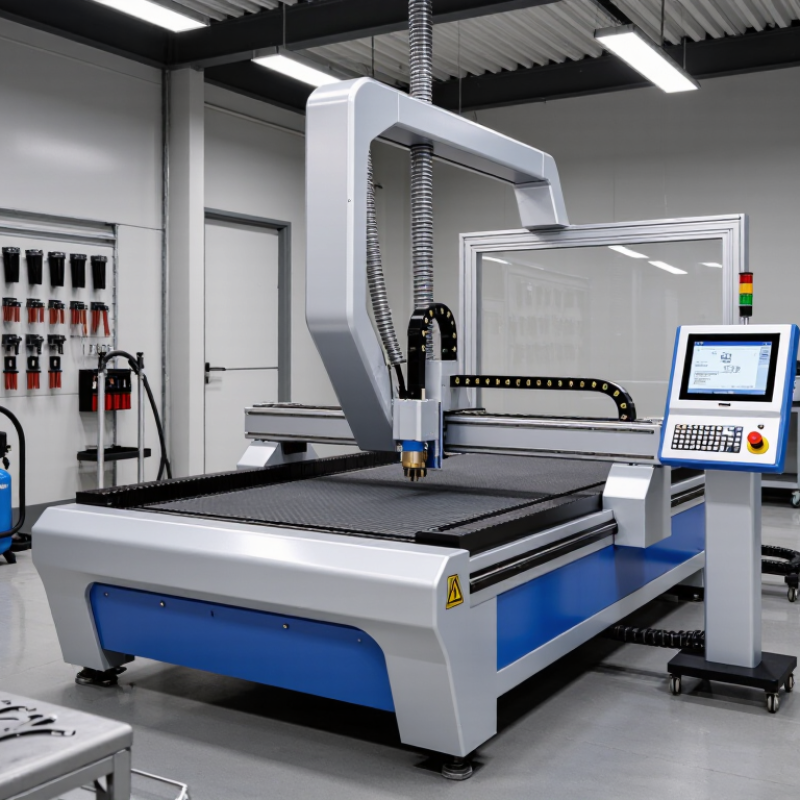
Table of Contents
[Hide]
Define Your Cutting Needs and Typical Material Sizes
Before choosing a small CNC plasma table, define what you actually cut. Record the material type, thickness, sheet length, and weekly cutting volume. A useful worksheet includes mild steel, stainless steel, aluminum, and occasional plate sizes. Do not rely on memory.
The 2024 Global Plasma Cutting Machine Market report by Grand View Research projects continued market growth through 2030, reflecting wider adoption in small fabrication shops. However, market growth does not identify your correct table size. Measure your most common sheet, then add clearance for clamps and edge travel. If your typical stock is 24 by 48 inches, a 2-by-4-foot cutting area may be restrictive. A 3-by-5-foot area could reduce repositioning, but it also needs more floor space and extraction capacity.
Thickness matters more than advertised maximum capacity. The machine should pierce your regular material without excessive retries. Separate everyday work from rare jobs. Cutting 6-millimeter steel weekly is different from cutting 16-millimeter plate twice a year. ISO 9013:2017 classifies thermal-cut quality by factors such as perpendicularity, surface roughness, and edge deviation. Use those criteria when reviewing sample cuts, not just speed claims. Ask for a test piece from your own material.
Be honest about imperfect records. My practical mistake was sizing equipment around the largest sheet, while most jobs used smaller blanks. A simple cutting log for four weeks can reveal the better choice. Your table should fit real work, not imagined work.
7 Tips for Choosing the Best Small CNC Plasma Table: Define Your Cutting Needs and Typical Material Sizes
| Tip | Decision Dimension | Typical Planning Data | How It Guides Your Choice |
|---|---|---|---|
| 1 | Define the main cutting work | Common small-table work includes brackets, signs, artwork, repair parts, gussets, flanges, and small production batches. | Choose a compact machine for occasional parts and light fabrication. Select a larger working area and stronger drive system when repeated production or larger structural parts are required. |
| 2 | Match the working area to sheet size | Typical small CNC plasma formats are approximately 2 × 2 ft (610 × 610 mm), 2 × 4 ft (610 × 1,220 mm), and 4 × 4 ft (1,220 × 1,220 mm). A standard 4 × 8 ft sheet measures about 1,220 × 2,440 mm. | The usable cutting envelope should be slightly larger than your largest part. If you regularly buy 4 × 8 ft sheets, a small table will require cutting the sheet into sections or using a material-handling extension. |
| 3 | Check material type and thickness | Plasma systems commonly cut electrically conductive metals such as mild steel, stainless steel, and aluminum. Light-duty work often uses sheet and plate from about 1–6 mm, while heavier systems may handle substantially thicker plate. | Confirm the machine's recommended cutting range for your actual material. Maximum severance thickness is not the same as the thickness suitable for clean, repeatable production cuts. |
| 4 | Select the correct plasma power range | For many light fabrication jobs, a 30–45 A plasma power source is used. Cutting capability varies with material, travel speed, consumables, gas pressure, and the manufacturer's specifications. | Choose power based on the thickest material you cut regularly, not on a one-time maximum. Extra capacity can improve productivity, but it may also increase electrical, consumable, and operating requirements. |
| 5 | Allow for edge clearance and part nesting | A part should not be planned exactly to the table's advertised dimensions. Clearance is needed for the torch path, clamps, slats, lead-ins, tabs, and scrap removal. | When a part is close to the maximum width or length, select the next larger table size. Adequate clearance also makes nesting easier and reduces the risk of torch collisions. |
| 6 | Evaluate accuracy and detail requirements | Small holes, narrow slots, fine lettering, and detailed artwork are more sensitive to kerf width, torch height, plate thickness, cut speed, and material distortion. | For precision parts, prioritize stable motion, automatic torch-height control, reliable homing, rigid slat support, and well-adjusted cutting parameters rather than choosing by table size alone. |
| 7 | Confirm utilities, ventilation, and workflow | Plasma cutting produces heat, fumes, sparks, ultraviolet radiation, and metal dust. Compressed air quality, electrical supply, fume extraction or water-table arrangements, and safe material access are essential. | A compact table is only suitable if the workspace can safely support ventilation, grounding, compressed air, electrical service, slag cleanup, and loading of the intended sheet dimensions. |
Note: Cutting capacity, usable work area, accuracy, and utility requirements vary by machine configuration, plasma power source, material grade, and operating conditions. Always verify the manufacturer's technical specifications before purchase.
Related Posts
-
How to Choose a Small CNC Plasma Cutter in 2026?
-

Best CNC Plasma Machine for Global Buyers 2026?
-
What Is the Best Small CNC Plasma Cutting Machine in 2026?
-
Top 10 Types of Plasma Cutting Machines to Buy?
-
Solutions for Optimizing Your Workflow with the Best Small CNC Plasma Cutting Machines
-

Understanding the Specifications of the Best Industrial CNC Plasma Table and How to Use It