
What Is a Sprinkler Irrigation Controller?
A Sprinkler Irrigation Controller is the scheduling center of an automated watering system. It tells valves when to open, how long to run, and which zones need water. Some models also adjust schedules after rain, temperature changes, or soil moisture readings. The controller does not create water pressure. It manages timing.
In a typical yard, the device may sit inside a garage or weatherproof enclosure. A homeowner sets separate programs for lawn zones, flower beds, and drip lines. For example, turf might run before sunrise, while newly planted shrubs receive shorter cycles. Correct programming depends on nozzle output, soil type, plant needs, and local weather. Manufacturer instructions and guidance from qualified irrigation professionals remain important references. A reliable setup also includes a rain sensor, properly labeled wires, and regular valve inspections.
Still, a controller cannot solve every irrigation problem. Leaking pipes, blocked nozzles, weak pressure, or poor sprinkler spacing can waste water despite a perfect schedule. That detail is easy to overlook. Real systems are rarely perfect. Seasonal adjustments may be forgotten, and sensor readings can be misleading when installed incorrectly. Understanding these limits helps users evaluate features with practical judgment. This guide explains how a Sprinkler Irrigation Controller works, what its settings mean, and how to choose a system that supports healthy plants without unnecessary watering.
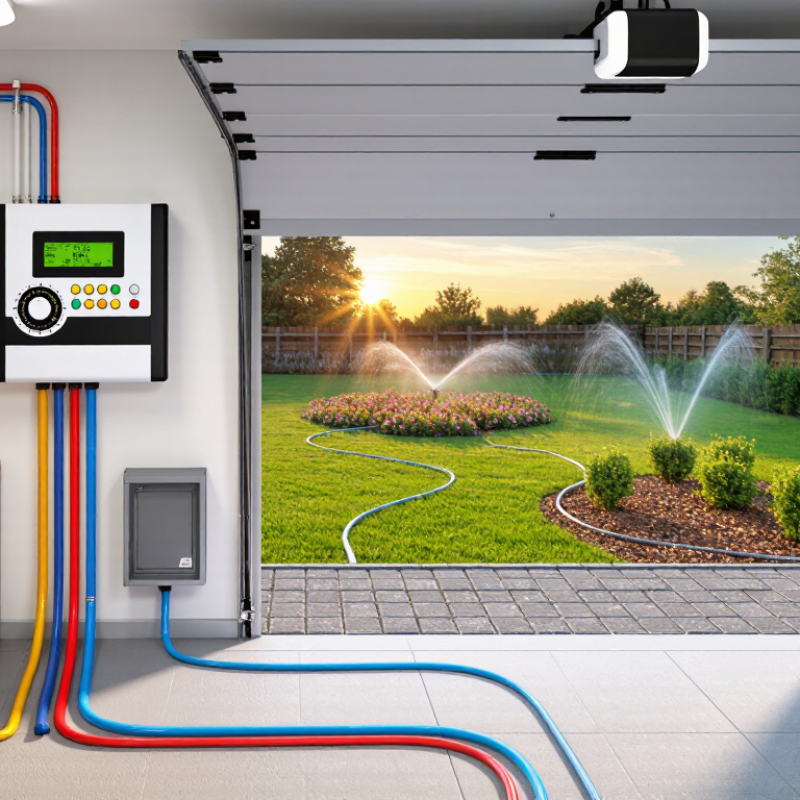
Table of Contents [Hide]
Definition and Purpose of a Sprinkler Irrigation Controller
A sprinkler irrigation controller is an electronic device that manages when and how long an irrigation system operates. It acts as the system’s timing center. The controller sends signals to valves, allowing water to reach selected lawn or garden zones. Its main purpose is to deliver consistent watering while reducing waste, runoff, and missed watering periods. Without accurate timing, even efficient sprinklers can overwater one area and leave another dry. Simple, but important.
In practical use, a controller follows a programmed schedule based on days, start times, and watering duration. A technician may set separate runtimes for shaded beds, sunny grass, and newly planted areas. Weather-aware adjustments can pause watering during rain or reduce runtime during cooler conditions. Soil moisture sensors may provide additional information, although their readings are not always perfect. That limitation matters. A controller still needs sensible programming and regular observation.
A reliable controller should be easy to adjust, clearly labeled, and suitable for the number of irrigation zones installed. During field checks, I have seen dry patches caused by incorrect schedules rather than faulty sprinklers. A perfect schedule rarely exists. Plant growth, soil type, wind, and seasonal temperatures keep changing. Checking the soil beneath the surface can reveal problems that the control panel cannot detect. Regular inspections help confirm that each zone receives enough water without creating puddles or unnecessary runoff.
What Is a Sprinkler Irrigation Controller? - Definition and Purpose of a Sprinkler Irrigation Controller
| Data Dimension | Definition or Typical Data | Purpose and Practical Importance |
|---|---|---|
| Basic Definition | An electronic device that automatically controls when an irrigation system starts and stops. | It manages watering according to programmed schedules, reducing the need for manual valve operation. |
| Primary Function | Opens and closes irrigation valves at selected times and for selected durations. | This distributes water to designated landscape areas in a controlled and repeatable manner. |
| Control Method | Most controllers use a low-voltage electrical signal to operate irrigation zone valves. | The controller can operate several zones independently while using one central programming unit. |
| Irrigation Zone | A group of sprinklers controlled by the same valve. | Separate zones help accommodate differences in plant type, sun exposure, soil, slope, and sprinkler water output. |
| Common Scheduling Inputs | Start time, watering days, program frequency, and run time for each zone. | These settings determine when watering occurs and how long each zone operates. |
| Watering Start Time | The programmed time at which a watering cycle begins. | Scheduling irrigation during cooler, less windy periods can reduce evaporation and wind drift. |
| Zone Run Time | The length of time a selected irrigation zone remains active during a cycle. | Run time should be adjusted to soil infiltration, sprinkler precipitation rate, plant needs, and local conditions. |
| Watering Frequency | The number of days or intervals between irrigation cycles. | Frequency can be changed seasonally to reflect rainfall, temperature, plant growth, and soil moisture. |
| Manual Operation | A temporary function that starts a zone or complete cycle without changing the regular schedule. | It is useful for testing equipment, performing maintenance, or providing supplemental watering. |
| Rain Sensor Compatibility | A connection or wireless feature that allows a rain sensor to suspend scheduled watering. | When adequate rainfall is detected, irrigation can be paused to help prevent unnecessary water use. |
| Soil Moisture or Weather-Based Control | Advanced controllers may use soil-moisture readings or weather information to adjust irrigation. | Dynamic adjustments can better match watering with current landscape conditions than a fixed schedule alone. |
| Seasonal Adjustment | A setting that increases or decreases programmed run times by a percentage. | It allows the overall schedule to be adapted for seasonal changes without editing every zone individually. |
| Cycle-and-Soak Function | A feature that divides one long watering period into shorter cycles separated by rest periods. | It can reduce runoff and improve infiltration on compacted, clay, or sloped soil. |
| Typical Power Source | Household AC power is commonly converted to low-voltage output for irrigation valves; battery-powered units are also available for some applications. | A reliable power source keeps scheduled watering active and supports safe valve control. |
| Back-Up Protection | Some controllers include a backup battery or nonvolatile memory to preserve time and programming during a power interruption. | This helps prevent schedule loss and reduces the need for complete reprogramming after an outage. |
| Number of Zones | Controllers are available with different zone capacities, from small residential systems to larger multi-zone installations. | The required capacity depends on the number of independent valve groups in the irrigation system. |
| Water Conservation Role | The controller does not create water savings by itself; savings depend on correct programming, system maintenance, and appropriate sensors. | Accurate scheduling can help avoid overwatering, runoff, watering during rainfall, and irrigation at unsuitable times. |
| Maintenance Considerations | Schedules, sensors, wiring, valves, sprinkler heads, and seasonal settings should be checked periodically. | Regular inspection helps identify broken components, blocked nozzles, leaks, incorrect coverage, and programming errors. |
| Common Applications | Residential lawns, gardens, public landscapes, sports areas, commercial properties, and small agricultural installations. | The controller provides centralized automation wherever multiple irrigation zones require timed operation. |