
How Much Does a Tyre Pyrolysis Plant Cost in 2026?
Estimating Tyre Pyrolysis Plant Cost in 2026 starts with a basic question: what exactly is included in the quoted price? A reactor alone is not a complete operating facility. Feed preparation, emissions controls, utilities, civil works, installation, and commissioning can all change the investment substantially. Two suppliers may quote very different totals while describing similar production capacity.
The scale of the feedstock challenge is documented in industry data. ETRMA’s 2021 European end-of-life tyre management report estimated that about 3.4 million tonnes of end-of-life tyres were generated in Europe in 2020, with roughly 94% collected and treated. This is regional evidence, not a global forecast, but it shows why dependable feedstock handling matters. WBCSD’s Tire Industry Project has also highlighted end-of-life tyres as a significant resource-management issue. Context matters.
A credible 2026 budget should separate equipment cost from site preparation, utilities, environmental safeguards, and working capital. It should also state the assumed throughput, operating hours, product quality, and local installation conditions. These details make supplier quotations easier to compare. They do not make every estimate precise. Public reports provide useful market context, but they do not establish one universal, independently verified plant price. That limitation deserves attention. This guide examines the main cost components, the factors behind price differences, and the questions buyers should ask before treating a headline quotation as a project budget.
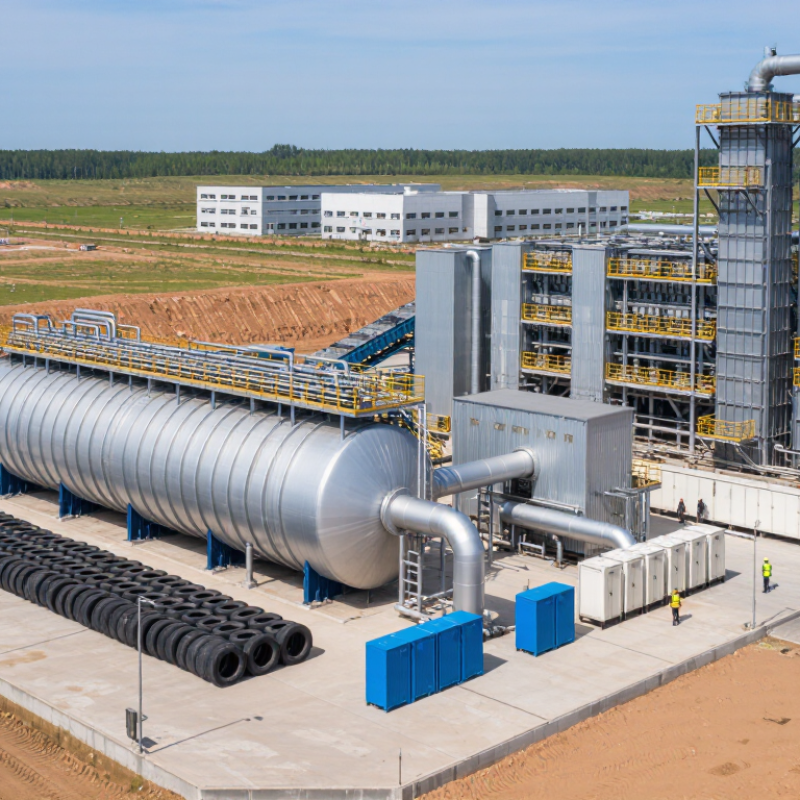
Table of Contents [Hide]
What Is a Tyre Pyrolysis Plant and What Does It Include?
How Much Does a Tyre Pyrolysis Plant Cost in 2026?
A tyre pyrolysis plant heats prepared tyres in a sealed reactor with limited oxygen. The process produces oil, non-condensable gas, steel, and carbon-rich solid residue. Output quality depends on feedstock, operating conditions, and equipment design. It is not a single machine.
A typical installation includes tyre cutting or feeding equipment, a reactor, a heating system, condensers, gas handling, residue discharge, and control instruments. Some layouts also include cooling, storage tanks, and pollution-control equipment. These systems need to work together. A poorly matched condenser, for example, can affect oil recovery. In 2026, there is no reliable universal price: capacity, automation, site preparation, installation, and local requirements all influence the total. Quotes may exclude utilities or commissioning, so compare the included scope carefully.
Tips: Ask for an itemized equipment list and clarify what installation covers. Check how the design handles startup, shutdown, and routine cleaning. Those details matter. It is easy to focus on reactor capacity alone, but maintenance access and residue handling can shape daily operation. A clear quote still needs careful review.
How Much Does a Tyre Pyrolysis Plant Cost in 2026? - What Is a Tyre Pyrolysis Plant and What Does It Include?
A tyre pyrolysis plant thermally processes end-of-life tyres in a low-oxygen environment. The budget ranges below are indicative 2026 planning estimates in USD, not supplier quotations. Actual costs depend on capacity, automation, site conditions, local emissions rules, and project scope.
| Plant configuration | Typical tyre feed capacity | Indicative installed project cost | Typical operating arrangement | Key cost considerations |
|---|---|---|---|---|
| Batch plant | Approximately 5–10 tonnes per day | Approximately $600,000–$1,800,000 | Tyres are loaded and unloaded in batches; heating and cooling occur in cycles. | Lower entry capacity, but labour, loading time, and batch-cycle downtime can affect throughput and operating cost. |
| Semi-continuous plant | Approximately 10–20 tonnes per day | Approximately $1,500,000–$4,000,000 | Some material-handling or process steps operate continuously, while other steps may require periodic handling. | Costs depend on feeding and discharge equipment, process configuration, storage, and the extent of automation. |
| Continuous plant | Approximately 20–30 tonnes per day | Approximately $3,000,000–$7,000,000 | Designed for ongoing feeding and product removal, subject to maintenance and operating conditions. | Higher equipment and control-system requirements; site infrastructure and emissions-control scope can materially change the total. |
What a Tyre Pyrolysis Plant Typically Includes
| System or component | Purpose | Typical inclusions | Factors affecting cost |
|---|---|---|---|
| Tyre preparation and feeding | Prepares and transfers tyre feedstock into the reactor. | Loading equipment; optional tyre cutting or shredding; conveyors, feed locks, or batch-loading equipment. | Whole-tyre versus pre-shredded feed, tyre size, required throughput, and automation level. |
| Pyrolysis reactor and heating system | Heats tyres in a low-oxygen environment to produce vapours and solid residue. | Reactor vessel, seals, drive or rotation equipment where applicable, burners, insulation, and temperature controls. | Reactor design, materials, operating capacity, heating arrangement, and safety instrumentation. |
| Vapour cooling and oil collection | Cools process vapours and collects condensable liquid products. | Piping, condensers, oil-water separation equipment where specified, tanks, pumps, and level controls. | Cooling-water availability, condenser capacity, storage volume, and product-handling requirements. |
| Non-condensable gas handling | Manages process gas; systems may use suitable gas as process fuel after treatment and control. | Gas lines, condensate traps, pressure controls, safety devices, and a designed combustion or reuse system. | Applicable safety codes, gas-cleaning requirements, burner design, and local permitting conditions. |
| Solid-residue discharge and handling | Removes char and steel wire from the process for further handling. | Cooling and discharge equipment, screens or separators, and optional magnetic steel separation. | Residue temperature, required separation quality, dust control, and whether downstream processing is included. |
| Emissions control | Controls exhaust and process emissions to meet applicable permit limits. | May include a secondary combustion chamber, scrubber, filtration, monitoring, and associated ductwork. | Local air-quality rules, fuel and process design, required monitoring, and site-specific environmental review. |
| Electrical, controls, and safety systems | Supports plant operation, monitoring, and protection of personnel and equipment. | Control panels, sensors, interlocks, emergency stops, electrical distribution, and fire and gas safety provisions as required. | Automation scope, local electrical standards, hazardous-area requirements, and integration with site utilities. |
| Installation and commissioning | Prepares the equipment for operation at the selected site. | May include equipment erection, piping and cabling, testing, commissioning, and operator training. | Shipping distance, civil works, labour rates, site access, utility connections, and the supplier’s scope of work. |
Cost scope: The plant-level ranges are indicative installed-project budgets and may include core process equipment, standard controls, installation, and commissioning. They generally exclude land, financing, taxes and duties, major site infrastructure, permitting, working capital, and optional tyre shredding or downstream product upgrading unless specifically included in a quotation. Component rows describe typical scope and are not separate prices to add to the plant-level totals.