
Top 10 Parcel Sorting System Manufacturers in China
Parcel sorting has become a practical priority for warehouses handling rising order volumes, tighter dispatch windows, and mixed parcel sizes. A Parcel Sorting System can route cartons and bags to the right chute, loading bay, or carrier area with less manual handling. Yet the equipment is only one part of the operation. Conveyor layout, barcode quality, software integration, and operator training all affect the result.
This guide introduces ten manufacturers in China and outlines factors buyers can compare: stated throughput, parcel-size range, sorting accuracy, controls, installation support, and access to spare parts. Look closely at the details. A headline speed may not reflect performance when parcels arrive unevenly or labels are damaged. Ask how capacity was measured, what happens during a jam, and whether the system can connect with existing warehouse software. These questions are more useful than polished product photos.
No list can establish the best supplier for every facility. That is a real limitation. A smaller operation may value a compact design and responsive service, while a high-volume hub may prioritize expansion options and proven uptime. Request site references, technical drawings, and clear acceptance-test criteria before comparing quotes. Check the assumptions behind each proposal, too. Even careful evaluations can miss local constraints, such as floor space or seasonal peaks. The manufacturers below offer a starting point for research, not a substitute for a site-specific assessment.
What Is a Parcel Sorting System?
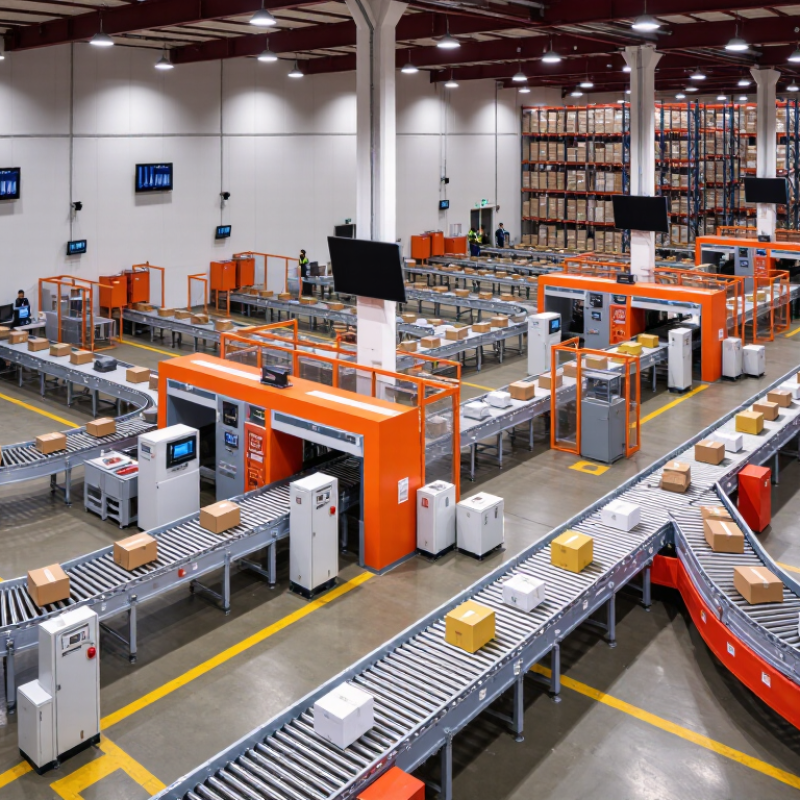
A parcel sorting system receives, identifies, routes, and dispatches packages with minimal manual handling. Conveyors move parcels past scanners that read barcodes or capture label images. Software matches each item to a destination, then directs it to a chute, lane, or loading area. At a busy hub, this can mean a small carton sliding into one lane while a padded envelope continues toward another. The system is more than a conveyor. It combines mechanical equipment, identification tools, routing logic, and operational controls.
The scale is substantial. China’s State Post Bureau reported 132.07 billion express parcels handled in 2023. Pitney Bowes’ 2024 Parcel Shipping Index estimated global parcel volume at 161 billion that year. Such volumes help explain why sorting speed and accurate identification matter. Still, system capacity depends on parcel size, label quality, staffing, and the building layout—not just a machine’s advertised hourly rate. That detail is easy to overlook.
For a buyer, the practical question is whether the equipment fits the real parcel mix and peak-hour flow. A sorter that works well with rigid boxes may struggle with soft mailers or irregular shapes. I would treat headline throughput figures cautiously and ask how they were measured. Not magic. Even a well-designed line needs maintenance, clear exception handling, and operators who can resolve unreadable labels without slowing the whole process.

How Parcel Sorting Systems Work
A parcel sorting system turns mixed inbound cartons into destination-ready flows. Operators feed parcels onto a conveyor, where scanners read barcodes or shipping labels. Cameras and dimensioning sensors can capture parcel size and orientation. The control software matches this data to a routing rule, then sends each item toward a chute, belt, or container. Small parcels move fast. But real parcels rarely arrive neatly spaced, and damaged labels can interrupt the flow.
At a diverter, a timed arm, sliding shoe, or belt transfer guides each parcel to its assigned lane. The system tracks movement and flags items that miss a scan or reach a full chute. MHI’s 2024 Annual Industry Report found that 55% of surveyed supply-chain leaders planned to increase technology investment, reflecting demand for more capable operations. That figure is not a parcel-sorting performance benchmark. Actual throughput depends on parcel mix, conveyor layout, staffing, and exception handling.
Tips: Test with your own parcels, including soft bags and crooked labels. Check scan-read rates and chute capacity during peak periods. Leave space for manual handling; automation still needs a practical fallback.
Top 10 Parcel Sorting System Manufacturers in China - How Parcel Sorting Systems Work
This comparison describes ten commonly used parcel-sorting system designs and their operating principles, rather than ranking individual manufacturers. Actual capacity and suitability depend on parcel dimensions, weight, layout, software, and operating conditions.
| System Type | How It Works | Typical Parcel Profile | Common Applications | Key Consideration |
|---|---|---|---|---|
| Cross-Belt Sorter | Parcels travel on individual carriers fitted with short belts. At the assigned destination, the carrier belt runs sideways to discharge the parcel. | Small to medium parcels with a stable base; compatible limits depend on the carrier design. | High-volume parcel hubs, e-commerce fulfillment, and destination-based sorting. | Offers flexible discharge directions, but requires accurate induction and careful carrier maintenance. |
| Sliding-Shoe Sorter | Programmable shoes move along a conveyor and gently push parcels toward a selected chute or takeaway lane. | Uniformly conveyed parcels that can tolerate controlled side contact. | Distribution centers and operations sorting parcels into multiple lanes. | Chute layout and parcel spacing affect performance; irregular items may need special handling. |
| Tilt-Tray Sorter | Items ride in trays that tilt at a programmed destination, allowing gravity to move them into a chute or collection point. | Small and medium items that fit securely within the tray. | Parcel, postal, and mixed-item sorting operations. | Tray dimensions determine which items can be handled; loose or unstable items may require containers. |
| Pop-Up Wheel Sorter | Angled wheel sets rise between conveyor rollers and redirect parcels toward a side lane. | Parcels with a reasonably flat bottom and suitable contact area. | Branch sorting, lane diversion, and moderate-volume conveyor systems. | Parcel orientation and bottom condition influence reliable transfer to the side lane. |
| Pop-Up Belt Sorter | Short belt sections lift above the main conveyor and move parcels at an angle onto a divert lane. | Cartons and parcels that can be supported by the divert belts. | Automated order fulfillment and conveyor-line routing. | Needs adequate space for the divert lane and suitable spacing between parcels. |
| Narrow-Belt Sorter | Multiple narrow belts rise or shift to move a parcel sideways from the main conveying path. | Items with dimensions and bases compatible with the belt spacing. | Compact sorting lines and operations with several destination lanes. | Small, soft, or uneven-bottomed parcels may require testing before deployment. |
| Push-Tray Sorter | A pusher mechanism on a moving tray transfers the parcel into a selected chute or lane. | Items that fit the tray and can withstand a controlled pushing action. | Parcel and item sorting where destinations are arranged along the sorter. | Correct parcel positioning and controlled pusher contact help reduce jams or damage. |
| Robotic Arm Sorter | Machine vision or identification devices locate an item; a programmed robotic arm picks or pushes it to a designated location. | Items within the robot's specified reach, payload, and gripping range. | Flexible sorting cells, irregular-item handling, and automated parcel induction. | Performance depends on item presentation, grip reliability, and the robot's working envelope. |
| Belt-Diverter Sorter | A conveyor belt or angled divert belt changes direction to guide parcels from the main line to a branch conveyor. | Parcels that remain stable during a controlled belt-to-belt transfer. | Simple routing points, branch lines, and lower-complexity sorting layouts. | Transfer angles, belt speed matching, and parcel spacing should be designed together. |
| Manual-Assisted Sortation Line | Conveyors bring parcels to operator stations, where workers identify destinations and place items into designated lanes or containers. | A broad range of parcels, subject to safe manual-handling limits. | Smaller hubs, seasonal overflow, exception handling, and operations with changing workflows. | Flexible to configure, but throughput and accuracy depend on staffing, training, and clear work instructions. |
Key Criteria for Evaluating Chinese Manufacturers
Chinese parcel-system manufacturers should be assessed on proven operating results, not headline speed alone. The Pitney Bowes 2024 Parcel Shipping Index reports about 161 billion parcels worldwide in 2023, including roughly 120 billion in China. That scale makes real-world capacity important. Ask suppliers to run a witnessed acceptance test using your parcel mix, including soft mailers, small boxes, and irregular cartons.
Measure sustained throughput, missort rate, jam frequency, restart time, and energy use. Request results across several shifts. A clean demo is not a factory day. Check whether the proposed line can handle peak loads without sacrificing scan accuracy or safe access for maintenance.
Review control-system interfaces, fault logs, and how operators clear common stoppages. These details often reveal more than a brochure.
Assess service capability as carefully as hardware. Ask for spare-parts lead times, technician response arrangements, training plans, and references from sites with similar volumes. Confirm what the quotation excludes, such as installation changes or software integration.
A lower price may hide real costs. Still, even a careful factory test cannot reproduce every seasonal surge; that uncertainty deserves a place in the decision.
Top 10 Parcel Sorting System Manufacturers in China
China’s parcel sorting system manufacturers serve warehouses, courier hubs, and distribution centers with different operating needs. A comparison of the top ten should look beyond advertised speed. Check the parcel size range, peak-hour throughput, sorting accuracy, and available integration options. These details show whether a system fits daily work.
Look closely at the equipment. Belt width, chute layout, scanner placement, and control screens affect how staff use the line. Ask manufacturers for measured performance under realistic parcel mixes, not just ideal test conditions. Request a factory acceptance test and clear installation plans. Small gaps matter. A scanner placed poorly can slow an entire section.
Service deserves equal attention. Confirm spare-part availability, remote support hours, training, and the response process for line stoppages. Ask for references from sites with similar volumes and building layouts. Compare total operating costs, including maintenance and energy use, rather than purchase price alone. One limitation: published figures may not reflect a busy peak season. Treat them as a starting point, then verify assumptions with sample data and a site-specific design review.
China Express Parcel Volume, 2015–2024
Annual parcel volumes provide market-demand context for parcel sorting system manufacturers in China. The chart presents industry-wide figures, not company rankings.
Source: China State Post Bureau annual statistics. Figures are in billions of parcels.
How to Compare Manufacturers for Different Operations
Compare parcel sorting system manufacturers by your operating pattern, not headline throughput. The 2024 Pitney Bowes Parcel Shipping Index reports that U.S. parcel volume reached 21.5 billion in 2023, down 1% year over year. That fluctuation matters: equipment sized only for peak season may sit underused later. Record average and peak parcels per hour, package sizes, label condition, destination mix, and available floor space. Fit matters.
Ask each manufacturer to test your own parcels, including soft mailers, small boxes, and damaged labels. Compare sustained throughput, sorting accuracy, jam frequency, and recovery time—not just a brief demonstration. Check how the system connects with your warehouse software, and ask for installation timelines, spare-part availability, and operator training. A larger sorter may offer headroom, but it can also demand more space and maintenance. No scorecard removes every trade-off.
Tips: Request a site-specific layout and a written performance test using representative parcels. Ask what happens when volume doubles or a scanner fails. Ask for proof. A polished presentation is useful, but operating evidence is better.

