What Are the Top Flange Accessories for 2026?
Flange connections depend on more than the flange itself. In 2026, the most useful accessories remain the parts that help a joint seal, stay aligned, and remain serviceable. A Flange Accessory may be a gasket, stud bolt, nut, washer, insulating kit, or blind flange. Each has a specific job. A spiral-wound gasket, for example, may suit one operating condition, while a different material is needed for another. There is no reliable “top” choice for every pipe system.
Good selection starts with the service details: flange dimensions, pressure and temperature range, process medium, and the applicable project specifications. Check material compatibility and fastener requirements, too. A gasket that fits neatly on the bench may still be unsuitable once heat, pressure, or chemical exposure enters the picture. Small details matter. Confirm dimensions and markings against approved drawings and supplier documentation, and ask a qualified engineer when requirements are unclear.
This guide examines the accessories commonly considered for flange assemblies and explains what to evaluate before purchase or installation. It also looks at practical factors such as corrosion resistance, maintenance access, and traceable product information. Product rankings can be useful, but they should not replace application-specific checks. Even a reputable component can be the wrong choice for a particular duty. That is worth remembering. The right accessory is the one that matches the joint, the operating conditions, and the verified requirements—not simply the one with the broadest claims.
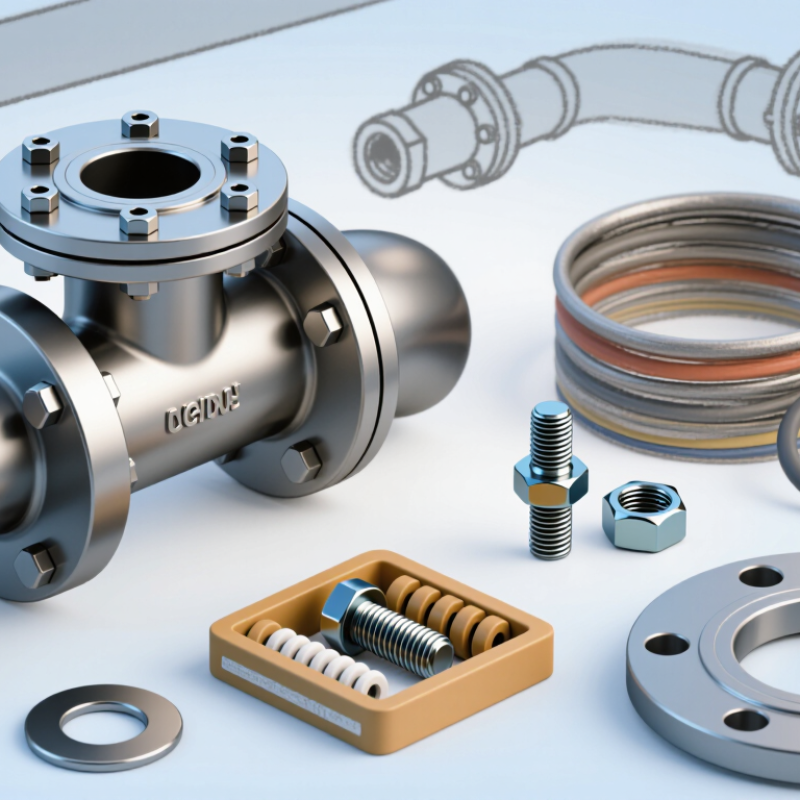
What Flange Accessories Are and How They Support a Piping Joint
Flange accessories are the components that help two pipe flanges form a stable, sealed joint.
The gasket sits between the flange faces and compresses as the bolts are tightened. Its material and thickness should suit the fluid, temperature, pressure, and face finish. Too little compression can leave a leak path; too much may damage the gasket or flange. Small parts matter. Even a clean, correctly selected gasket can perform poorly if the faces are misaligned or the bolt load is uneven.
Bolts and nuts provide the clamping force, while washers can help distribute load where the joint design calls for them. Insulation kits separate connected flanges electrically, and spacers or blinds may support access, isolation, or maintenance plans.
These accessories are not interchangeable by appearance alone. Check dimensions, materials, pressure ratings, and service conditions against the piping specification. It is tempting to treat a leak as a gasket problem; that assumption is often too quick.
Uneven tightening, damaged faces, or poor alignment may be involved, so inspection should consider the whole joint. A careful fit-up, followed by a controlled tightening sequence, gives the accessories a fair chance to do their job.
Which Gaskets and Seals Are Commonly Used with Flanges
What Are the Top Flange Accessories for 2026?
Which Gaskets and Seals Are Commonly Used with Flanges
Flange gaskets create a seal between two mating surfaces. Common options include spiral-wound gaskets, compressed fiber sheets, and metal ring-joint gaskets. Spiral-wound designs combine metal windings with filler material, making them suitable for many demanding service conditions. Sheet gaskets are often used for flatter, lower-pressure joints. Ring-joint gaskets fit specially machined grooves and require compatible flange faces. Elastomer seals also appear in some systems, especially where operating conditions suit their material properties. No single gasket works everywhere.
Tips: Check the service fluid, temperature, pressure, flange-face finish, and gasket dimensions before choosing a seal. Confirm the equipment specifications, too. During installation, keep surfaces clean and align the flanges evenly. Tighten bolts in a cross-pattern using the specified procedure; uneven loading can cause leaks. Small details matter.
A gasket that looks undamaged may still be unsuitable after removal. Reusing one can be tempting, but compression and surface marks may affect sealing. Inspect the flange faces for scratches, corrosion, or residue, and replace questionable components. Selection charts help narrow options, yet actual conditions can differ from expected ones. When details are uncertain, consult qualified engineering guidance rather than guessing.
Common Flange Gasket Types: Indicative Temperature Limits
The chart compares representative upper service temperatures in °C for common gasket constructions. Actual limits depend on material grade, pressure, media, and operating conditions; always confirm suitability for the specific application.
How Bolts, Nuts, and Washers Secure Flanged Connections
Bolts, nuts, and washers do more than hold a flange together. They create and maintain the compression that helps a gasket seal against pressure, heat, and vibration. Bolt material and length must suit the joint, while nuts need compatible threads and sufficient engagement. Hardened washers can spread bearing load and reduce surface damage beneath rotating nuts. Small details matter.
The NASA Fastener Design Manual, Reference Publication 1228, describes torque-controlled tightening as an indirect way to set bolt preload, with preload variation commonly around ±25%. That spread matters: uneven tightening can leave one side of a gasket under-compressed and invite leakage. ASME PCC-1-2022 provides guidance for assembling pressure-boundary bolted flange joints, including controlled tightening practices. In the field, crews should check thread condition, lubrication, washer seating, and tightening sequence against the approved procedure. Use calibrated tools. Not guesswork. A clean, repeatable cross-pattern helps distribute load, but it does not replace the specified bolt-load method. Even careful teams can overlook a damaged thread or a washer that has shifted. Worth checking twice.
What Are the Top Flange Accessories for 2026? - How Bolts, Nuts, and Washers Secure Flanged Connections
| Accessory | Common Type or Material | Role in the Flanged Joint | Selection and Installation Notes |
| Stud bolts | Threaded rod with nuts at both ends; ASTM A193 Grade B7 is a common alloy-steel bolting specification for pressure-service applications. | Clamps the flange pair together and helps maintain gasket compression. | Confirm diameter, length, thread, material, and temperature requirements against the flange and joint specification. Stud length must allow adequate nut engagement without unnecessary thread protrusion. |
| Hex-head bolts | Headed bolts in carbon steel, alloy steel, or stainless steel, selected to suit the service and applicable specification. | Provide clamping force where the joint design and flange arrangement specify bolts rather than studs. | Check bolt length, thread engagement, strength, and corrosion compatibility. Use the bolting arrangement specified for the flange; bolts and studs are not interchangeable in every joint. |
| Hex nuts | ASTM A194 Grade 2H nuts are commonly used with ASTM A193 Grade B7 bolting in many pressure-service joints. | Engage the bolt or stud threads and apply the clamping load to the joint. | Match nut material and thread to the bolting. The B7/2H combination is common, but the correct grades depend on design, temperature, and service requirements. |
| Hardened washers | Hardened steel washers; the required type and specification depend on the joint design and applicable project requirements. | Can provide a bearing surface and help distribute load beneath a nut or bolt head when specified. | Washers are not required for every flange joint. Confirm their use, hardness, dimensions, and material compatibility before installation. |
| Corrosion-resistant bolting | Stainless-steel or appropriately coated bolting selected for the environment and service conditions. | Helps limit corrosion of the fasteners in environments where the selected material or coating is suitable. | Consider corrosion resistance, temperature, strength, and galvanic compatibility with connected components. Coatings and lubricants can affect tightening behavior. |
| Thread lubricant | A lubricant approved for the application and compatible with the process and materials. | Reduces thread and bearing friction during tightening when the approved assembly procedure calls for it. | Use only the lubricant and tightening method specified by the joint procedure; friction changes can alter the preload produced by a given torque. |
Selection note: Verify bolting dimensions, materials, and tightening procedures against the applicable flange standard, engineering specification, and service conditions. No single material combination or installation method is suitable for every flanged connection.
When Flange Guards, Spacers, and Alignment Tools Are Needed
What Are the Top Flange Accessories for 2026?
When Flange Guards, Spacers, and Alignment Tools Are Needed
Flange accessories matter most when they address a specific risk. A flange guard can help shield nearby workers and equipment from spray if a joint leaks. It is useful around corrosive fluids, hot lines, or hard-to-reach connections. But a guard is not pressure containment. Choose a design suited to the fluid, temperature, and operating conditions, and keep inspection access in mind. A covered joint can hide early signs of trouble. That detail is easy to overlook.
Spacers help maintain a planned gap or adapt a connection during installation or maintenance. Their material, thickness, and pressure rating must match the piping specification; an improvised spacer can compromise the joint. Alignment tools are valuable when bolt holes do not line up naturally. They can bring flanges into position before bolting, reducing the temptation to force alignment with bolts. Slow is safer. Check that the pipe is supported and unloaded before adjusting it, and follow site procedures. In practice, a tool can make a difficult fit easier, but it cannot correct poor support or a badly positioned pipe. That distinction deserves a second look.
How to Choose Accessories for Flange Materials and Service Conditions
What Are the Top Flange Accessories for 2026?
How to Choose Accessories for Flange Materials and Service Conditions
Choose accessories for the actual service, not just the flange rating. Record the fluid, pressure, temperature range, cycling, and flange-face finish before selecting a gasket. PTFE suits many chemically aggressive services, while flexible graphite is often used at higher temperatures; neither is universal. Confirm compatibility with the fluid and operating conditions. A small mismatch matters.
Match bolting to the flange material, temperature, and required load. In wet service, dissimilar metals can increase galvanic-corrosion risk, so consider compatible alloys or an insulating kit. Check that its sleeves and washers fit the bolt holes without damaging the gasket seating area. For hazardous or hot services, a flange spray shield may help contain a leak, but it does not replace sound joints or inspection. Details get missed.
The NACE International 2016 IMPACT study estimated corrosion costs at US$2.5 trillion annually, about 3.4% of global GDP, and reported potential savings of 15–35% through effective corrosion management. That is a broad, economy-wide estimate, not a flange-accessory forecast. Still, it underlines why material compatibility deserves attention. Recheck selections after process changes; startup temperatures and repeated thermal cycles can differ from steady-state conditions.