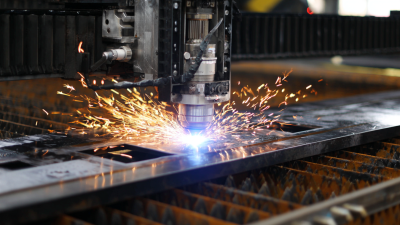
Who Are the Top CNC Cutting Machine Manufacturers in China?
China’s CNC cutting machine sector includes manufacturers serving metal fabrication, woodworking, signage, and other production needs. For buyers, the challenge is not finding a company that lists impressive specifications. It is finding a machine suited to the material, workload, floor space, and support available after installation. A fast spindle or large cutting bed means little if the machine cannot hold tolerances across a full shift.
This guide examines leading Chinese manufacturers through practical comparison points: machine types, working dimensions, control systems, component choices, customization, and service arrangements. Buyers should request technical drawings, sample-cut results, warranty terms, and references from customers with similar applications. Ask how the supplier handles installation, operator training, spare parts, and software updates. Details like these can matter as much as the quoted price. They matter.
The phrase cnc cutting covers a wide range of equipment, so a company suited to sheet-metal work may not be the right choice for acrylic or solid wood. Rankings also have limits. Public product pages cannot verify every claim, and a strong factory visit does not guarantee an effortless project. That is worth admitting. Use the manufacturer profiles as a starting point, then compare specifications against real production requirements. A careful shortlist can reduce costly mismatches, but it cannot replace testing a sample or confirming service expectations in writing.
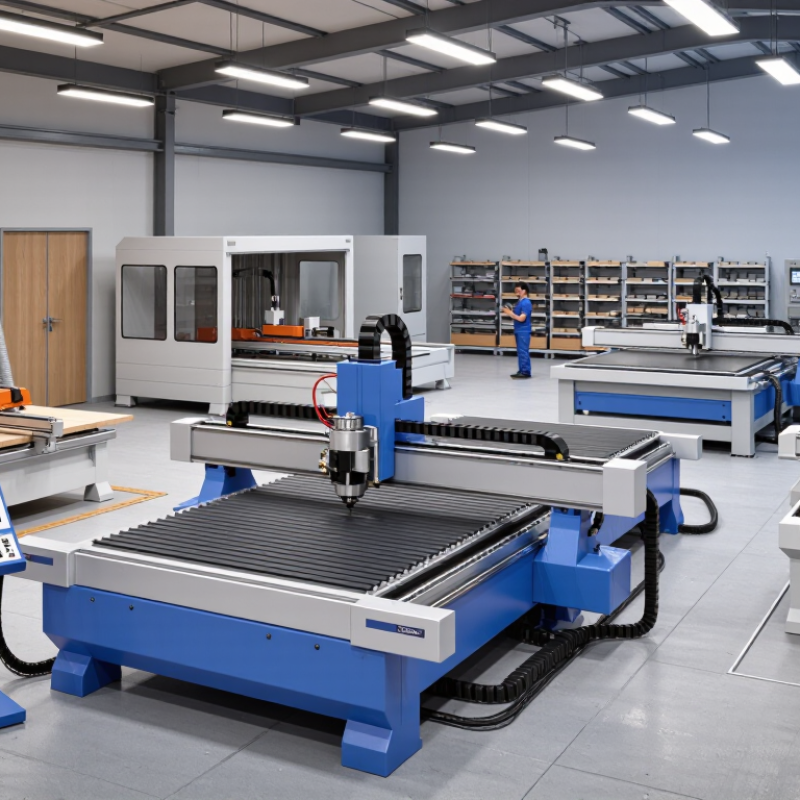
What Is a CNC Cutting Machine, and Which Processes Does It Use?
A CNC cutting machine uses programmed instructions to guide a cutting tool along selected paths. The design is usually prepared in CAD software, then converted into machine-readable commands. Motors move the cutting head or workpiece across controlled axes. This helps produce repeatable shapes from sheet materials and plates. The result still depends on setup, material, and tool condition.
Common processes include laser, plasma, oxy-fuel, waterjet, and knife cutting. Laser cutting can create narrow, precise cuts in suitable metals and other materials. Plasma cuts electrically conductive metals, while oxy-fuel is often used for thicker carbon steel. Waterjet cutting uses a high-pressure stream and can limit heat-related changes near the cut. Knife systems suit softer materials such as foam, fabric, or thin composites. No single process works best for every job.
Tip: Match the process to the material and required edge quality. Check a sample cut before a full run, and inspect for burrs, heat marks, or rough edges. A fast setting may look efficient on screen, yet produce more cleanup in practice. Small setup differences matter.
How Do Fiber-Laser, Plasma, and Flame Cutting Differ?
World Steel Association’s World Steel in Figures 2024 reports 1,892.2 million tonnes of crude steel production in 2023. That scale helps explain why choosing the right cutting process matters. Fiber lasers focus a narrow beam on sheet metal, producing precise edges and small kerfs. They suit detailed parts and thinner-to-medium stock, though thick sections can raise cost and slow production.
Plasma cutting uses an electrically charged gas, so it cuts electrically conductive metals, including steel and aluminum. It handles thicker plate quickly, but its wider kerf may leave more edge cleanup. Flame cutting uses oxygen and fuel gas to oxidize steel. TWI technical guidance describes it as suitable for thick carbon-steel sections, but it does not cut aluminum or stainless steel effectively. Heat can also distort smaller parts. Real shop results vary with material grade, thickness, consumables, and operator setup.
Tip: Match the process to the part. Check a sample cut for edge quality, kerf width, and heat distortion before committing to a full production run. A neat laser edge is not always the cheapest choice.
Which Chinese Manufacturers Lead, Including Han’s Laser, Bodor, HSG, and Penta Laser?
China’s leading CNC cutting-machine manufacturers are better judged by engineering fit than by headline laser power. Major Chinese suppliers differ in sheet-metal systems, tube cutting, automation, and service coverage. Buyers should compare cutting accuracy, repeatability, nesting software, safety features, and support response times. A fast machine is not automatically the best machine.
Market context matters, but it is not a ranking. IFR’s World Robotics 2024 report says China installed 276,288 industrial robots in 2023, representing 51% of global installations. This signals a large automation ecosystem, not proof that any specific cutter maker leads. Ask suppliers for test cuts on your actual material and thickness. Check edge quality, scrap rates, and uptime records. Specifications can look convincing. Real production is messier.
Tips: Request a live cutting demonstration, then inspect the cut edge under consistent lighting. Compare total operating costs, including consumables and maintenance. No shortlist is perfect; service quality can vary by region, and that deserves careful checking.
How Does ISO 9013:2017 Classify Thermal-Cut Quality into Five Classes?
Who Are the Top CNC Cutting Machine Manufacturers in China?
ISO 9013:2017 classifies thermal-cut quality into five ranges, often called classes. Range 1 is the tightest; range 5 allows wider deviations. The standard evaluates cut-face perpendicularity or angularity tolerance, u, and mean profile height, Rz5. Its thickness-indexed tables show why a single visual check cannot establish compliance. A smooth-looking edge may still miss the dimensional limit.
For a practical inspection, measure the cut face at several points and record the material thickness and cutting process. Compare both measurements with the applicable ISO 9013:2017 table values. The standard is a technical reference, not a machine-performance report: results also depend on material, setup, and operating conditions. A narrow kerf looks convincing, but it does not prove a higher quality range. That distinction is easy to miss.
Tips: Check the drawing’s required range before cutting. Keep a sample coupon and measurement record; they make repeat jobs easier to assess. Don’t rely on appearance alone.
Who Are the Top CNC Cutting Machine Manufacturers in China? - How Does ISO 9013:2017 Classify Thermal-Cut Quality into Five Classes?
| Topic | Dimension or class | What to assess | Practical interpretation |
|---|---|---|---|
| ISO 9013:2017 thermal-cut quality ranges | Class 1 | Perpendicularity or angularity tolerance, u, and mean profile height, Rz5 | Tightest quality range; generally associated with the most demanding cut-edge requirements. |
| Class 2 | Perpendicularity or angularity tolerance, u, and mean profile height, Rz5 | High quality range, less stringent than Class 1. | |
| Class 3 | Perpendicularity or angularity tolerance, u, and mean profile height, Rz5 | Intermediate quality range for applications with moderate edge-quality requirements. | |
| Class 4 | Perpendicularity or angularity tolerance, u, and mean profile height, Rz5 | Less stringent quality range; suitability depends on the part’s functional requirements. | |
| Class 5 | Perpendicularity or angularity tolerance, u, and mean profile height, Rz5 | Broadest quality range in this classification; confirm acceptability against the drawing and application. | |
| Manufacturer evaluation | Cutting process and material range | Check whether the machine uses laser, plasma, or oxy-fuel cutting and whether the supplier specifies supported materials and thicknesses. | Compare performance only for the process, material, thickness, and operating conditions relevant to your parts. |
| Manufacturer evaluation | Demonstrated cut quality | Request sample cuts and measurement results for edge perpendicularity or angularity and profile height. | Ask for test conditions and measurement methods; a machine specification alone does not establish the quality achieved on a particular job. |
| Manufacturer evaluation | CNC and production capability | Review working area, axis configuration, nesting and programming workflow, automation options, and stated positioning or repeatability specifications. | Match machine configuration and documented capabilities to part size, production volume, and required process consistency. |
| Manufacturer evaluation | Service and compliance documentation | Verify available installation, training, maintenance, spare-parts support, safety documentation, and applicable machine conformity documents. | Evaluate support commitments and documentation for the destination market rather than relying on an unverified ranking. |
Note: ISO 9013:2017 classifies thermal-cut quality using specified tolerances and surface-profile characteristics. Applicable limits depend on the relevant standard provisions and cutting conditions; confirm the required class and acceptance criteria for the material thickness and process in question.
How Should Buyers Compare Accuracy, Cutting Speed, Service, and Total Cost?
Compare accuracy through repeatable tests, not brochure tolerances. ISO 230-2:2014 describes methods for measuring positioning accuracy and repeatability in numerically controlled machine tools. Ask for test results across the usable work area, with warm-up conditions recorded. Mechanical accuracy alone does not prove clean edges. Small gaps matter.
For speed, request a timed cut using your material, thickness, and typical part layout. Include piercing, cornering, loading, and unloading; maximum feed rate rarely reflects daily output. Count acceptable parts per shift, then inspect edge quality and scrap. A fast cut that needs rework is not fast.
Service and ownership costs deserve equal scrutiny. Compare response times, technician coverage, spare-part availability, training, and preventive-maintenance terms. The U.S. Department of Energy’s Improving Compressed Air System Performance guide notes that compressed air represents about 10% of U.S. industrial electricity use; that is a system-wide estimate, not a machine-specific figure. Still, it shows why buyers should measure utilities alongside consumables, labor, and downtime. Request a written cost model based on your shifts and material mix. Estimates can be imperfect; disclose the assumptions.
Who Are the Top CNC Cutting Machine Manufacturers in China?
How should buyers compare accuracy, cutting speed, service, and total cost?
This illustrative scorecard assigns 100% of the evaluation weight across four buyer priorities; it is not a manufacturer ranking or market survey. Adjust the weights to match your materials, production volume, accuracy requirements, local service needs, and expected machine lifetime. Compare quotations using the same test conditions and include installation, consumables, maintenance, and downtime in total cost.
Related Posts
-
Emerging Trends for 2025: The Rise of Best CNC Plasma Cutting Tables in Manufacturing Efficiency
-
Understanding the Specifications of the Best Industrial CNC Plasma Table and How to Use It
-
2025 How to Choose the Best Small CNC Plasma Cutter for Your Needs
-
What is CNC Plasma Cutting and How Does it Work for Beginners
-
The Ultimate Guide to CNC Plasma Cutting in 2025 for Beginners
-
CNC Plasma Table Tips for Beginners How to Choose the Right One?