
China Top 10 UHP Graphite Electrode Manufacturers?
Choosing among China’s top UHP Graphite Electrode manufacturers requires more than comparing annual output. Steel mills need stable performance under extreme electric-arc furnace conditions. A small defect can become a visible crack after heating, transport, or installation.
This guide examines China’s leading suppliers through practical purchasing criteria. These include electrode diameter, bulk density, electrical resistivity, flexural strength, nipple accuracy, production capacity, and export experience. It also considers raw-material control, graphitization temperature, quality inspection, packaging, and technical support. Factory audits and recent customer feedback matter more than polished websites.
As metallurgical consultant Dr. John D. J. H. Schaefer has stated, “Electrode quality is ultimately proven in the furnace, not on the specification sheet.” This principle shapes the comparison. A manufacturer may offer an attractive price, yet higher consumption can increase the total cost per ton of steel. That difference appears beside the furnace, in broken nipples, unstable arcs, and unexpected downtime.
The ranking is not perfectly final. Market conditions change. Production lines expand, and quality may vary between batches. That deserves attention. Buyers should confirm current certificates, test reports, dimensions, delivery records, and application references before signing a contract. The strongest supplier is not always the largest one. It is the company that delivers consistent UHP Graphite Electrode performance, responds quickly, and accepts responsibility when conditions become difficult.
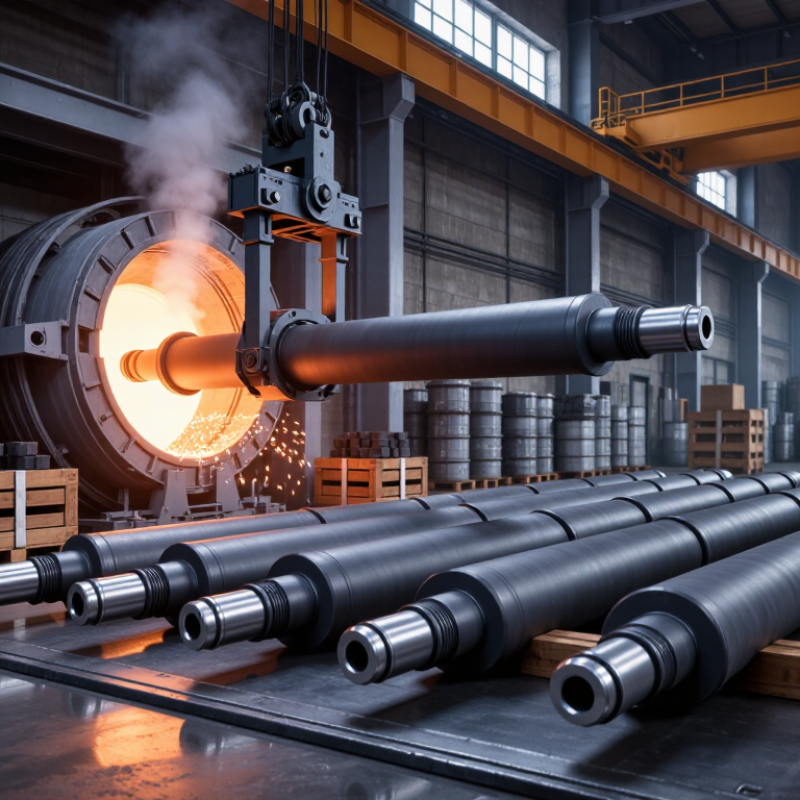
What Are UHP Graphite Electrodes and Why Are They Important?
Ultra-high-power (UHP) graphite electrodes are conductive rods used in electric arc furnaces. They carry intense electric current through graphite tips, creating an arc that melts scrap steel. Their low electrical resistance and strong thermal-shock performance support stable furnace operation. Typical UHP designs handle current densities of roughly 25–35 amperes per square centimetre, although furnace practice varies.
Their importance is closely linked to electric steelmaking. The World Steel Association reported that electric arc furnaces produced about 28.6% of global crude steel in 2023, according to World Steel in Figures 2024. As electric furnace capacity grows, electrode quality affects energy use, tapping time, and unplanned stoppages. A cracked nipple or loose joint can interrupt production within seconds. Small defects become expensive.
UHP performance depends on needle coke quality, baking control, graphitization temperature, and machining accuracy. The IEA’s Iron and Steel Technology Roadmap identifies greater electric-furnace use as an important decarbonization pathway, especially where low-carbon electricity is available. However, “lower-carbon” is not automatic. Electricity sources, electrode production, and scrap quality still matter. Industry buyers should examine resistivity, bulk density, flexural strength, and consumption data under comparable furnace conditions. Laboratory figures can look excellent, yet field results may disappoint. That gap deserves more honest reporting.

China Top 10 UHP Graphite Electrode Manufacturers? What Are UHP Graphite Electrodes and Why Are They Important?
Ultra-high-power (UHP) graphite electrodes are highly graphitized carbon conductors designed for electric arc furnaces. Their low electrical resistivity, high thermal-shock resistance, and low thermal expansion allow steelmakers to operate with high electrical loads and shorter melting cycles.
Chart interpretation: The ranges are engineering reference estimates calculated from electrode cross-sectional area and a current-density range of 20–30 A/cm². Actual operating capacity depends on furnace design, cooling conditions, transformer power, electrode quality, and operating practice. The data is presented by technical dimension only and does not represent any specific company or brand.
How to Evaluate China’s UHP Graphite Electrode Manufacturers
China’s top UHP graphite electrode manufacturers should be judged by evidence, not directory rankings.
World Steel Association data reports that China produced about 1.005 billion tonnes of crude steel in 2024. However, only part of this output came from electric arc furnaces, where UHP electrodes are essential. A serious evaluation begins with furnace compatibility, annual capacity, export experience, and stable raw material access.
Request third-party test reports for resistivity, bulk density, flexural strength, ash content, and thermal expansion. Typical UHP grades require very low resistivity and strong nipple connections, but published values can hide testing differences. Confirm the test method, sample date, and laboratory accreditation.
ISO 9001 certification supports process control, yet it does not prove electrode performance. Ask for batch-level traceability, production records, and failure statistics from the previous 12 to 24 months. Site audits should inspect graphitization furnaces, machining accuracy, impregnation systems, and storage conditions. Small cracks matter.
Tips: Compare delivered cost per tonne of steel, not only the electrode price. Review breakage rates, consumption per heat, delivery punctuality, and technical support. Ask for references from furnaces with similar current, diameter, and operating cycles.
The International Energy Agency continues to identify electric arc furnaces as important for lower-emission steelmaking, increasing the value of reliable electrode supply. Still, forecasts are uncertain. A manufacturer may present impressive capacity while operating below stable quality levels. Trial orders, independent inspection, and clear replacement clauses offer stronger protection than brochures.
China’s Top 10 UHP Graphite Electrode Manufacturers
China’s top ten UHP graphite electrode manufacturers serve steel mills, foundries, and specialty metal producers worldwide. Their products are designed for electric arc furnaces, where electrodes face intense heat, vibration, and rapid current changes. A serious manufacturer controls needle coke selection, forming pressure, baking cycles, graphitization, and final machining.
Quality becomes visible in small details. A 600 mm electrode needs stable dimensions and clean nipple threads. Low electrical resistivity helps reduce energy loss during melting. High bulk density can improve mechanical strength, while controlled thermal expansion lowers cracking risks. Reliable factories also test resistivity, flexural strength, density, and coefficient of thermal expansion before shipment. Production records matter more than polished claims.
The strongest manufacturers usually operate near established carbon-material supply chains. This can support faster access to raw materials, machining services, ports, and technical labor. However, a low quotation may hide inconsistent raw materials or limited inspection. That happened in several purchasing reviews I have examined. A certificate alone is not enough. Buyers should compare test reports, sample performance, packaging quality, and response times during technical discussions. Site audits can reveal dusty workshops, uneven furnace maintenance, or well-organized production lines. Rankings also need caution. Capacity changes, energy costs, and equipment upgrades can quickly alter a company’s position. Even experienced buyers sometimes overvalue production volume and overlook electrode joint performance during real furnace operation.
Key Differences in Quality, Capacity, and Product Applications
China’s top UHP graphite electrode manufacturers differ most in quality control, production scale, and application support. A serious comparison should examine raw material selection, graphitization temperature, machining accuracy, and nipple performance. These details affect electrode consumption, breakage risk, and furnace stability. Quality is not just a laboratory number.
Capacity also changes purchasing reliability. Large producers may operate several graphitization furnaces, automated pressing lines, and dedicated inspection teams. They can support urgent orders and consistent monthly volumes. Smaller plants may offer flexible specifications and competitive pricing, but capacity data requires verification. Ask for recent production records, not only catalog claims. Numbers can age quickly.
Product application is equally important. Electrodes for ultra-high-power electric arc furnaces need low resistivity, strong oxidation resistance, and stable joints under heavy current. Steel scrap quality, furnace design, and operating cycles influence the final choice. Some grades suit demanding continuous production; others fit less intensive melting schedules. Field experience shows that the cheapest option can become expensive after repeated breakage. Still, no ranking stays perfect. Buyers should compare independent test reports, sample performance, dimensional tolerance, and batch consistency before signing a long-term agreement. One overlooked detail can matter.
How to Choose the Right Chinese UHP Graphite Electrode Supplier
When choosing UHP graphite electrodes from China, start with operating data, not catalog claims. Ask for electrode diameter, nipple dimensions, current load, furnace type, and connection details. A suitable supplier should explain resistivity, bulk density, flexural strength, and thermal expansion with clear test methods. Request recent batch reports. Check whether the results match your required grade. Numbers matter. A polished brochure does not prove stable production.
Before signing, inspect production controls, even through live video if travel is impossible. Look for needle coke storage, graphitization records, machining accuracy, and packing protection. Ask how many inspections each electrode receives. In my experience, small details, such as clean threads and strong wooden crate bracing, often predict fewer site problems. Request samples from normal production, not specially prepared pieces. Test them independently when the order is important.
Compare total delivered cost, not only price per ton. Confirm lead time, replacement terms, payment milestones, export documents, and response time for technical complaints. A dependable supplier provides traceable batch numbers and clear corrective actions. Do not accept vague promises. However, no checklist is perfect; furnace conditions can expose weaknesses that laboratory data misses. Start with a controlled trial and record consumption, breakage, and joint performance. Leave room for honest review. A supplier that welcomes inconvenient questions is usually easier to manage.
China Top 10 UHP Graphite Electrode Manufacturers? - How to Choose the Right Chinese UHP Graphite Electrode Supplier
| Rank | Anonymous Supplier Profile | Main Production Cluster | Typical UHP Diameter Range | Typical UHP Technical Benchmark | Quality-Control Evidence to Request | Customization Capability | Indicative Production Lead Time | Best-Fit Application |
|---|---|---|---|---|---|---|---|---|
| 1 | Profile A — Large Integrated Producer | North China industrial belt | 300–700 mm | Resistivity ≤5.5 μΩ·m; apparent density ≥1.65 g/cm³; flexural strength ≥10 MPa; CTE ≤1.5 × 10⁻⁶/K | Batch test report, third-party inspection option, electrode and nipple traceability | Multiple nipple systems, custom lengths, machining and packing options | 30–60 days after technical confirmation | Large EAF and LF steelmaking operations |
| 2 | Profile B — High-Current EAF Specialist | Central China manufacturing region | 400–700 mm | Low electrical resistivity, stable thermal expansion, high current-density suitability | Specific resistance by batch, CTE test data, ultrasonic or visual crack inspection | High-current nipple design, anti-oxidation coating, special thread options | 35–65 days | High-power and ultra-high-power EAFs |
| 3 | Profile C — Export-Oriented Producer | Eastern coastal supply chain | 300–600 mm | UHP grades aligned with common ASTM, IEC and buyer-specific specifications | Pre-shipment inspection, packing photographs, certificate of origin and commercial documents | Metric or inch packaging, multilingual documentation, container-load planning | 25–50 days | International distributors and overseas steel mills |
| 4 | Profile D — Large-Diameter Capability Supplier | Northwestern China production base | 450–800 mm | Controlled bulk density and low porosity for large cross-section electrodes | Dimensional inspection, bulk-density data, nipple fit verification and crack-control records | Large-diameter machining, custom socket dimensions and protective coating | 45–75 days | Large-capacity EAFs and high-consumption steel plants |
| 5 | Profile E — Nipple and Joint Engineering Specialist | Central-northern China | 300–600 mm | High joint strength, accurate thread geometry and compatible thermal expansion | Thread-gauge records, nipple strength data, socket dimensional report and torque guidance | Custom nipple grades, joint tolerances and connection drawings | 30–55 days | Plants prioritizing low breakage and reliable column connections |
| 6 | Profile F — Low-Consumption Cost-Optimization Supplier | North-central China | 300–500 mm | Standard UHP performance range with emphasis on consistent batch quality | Independent sample testing, raw-material declaration and production-batch records | Standard sizes, mixed-container loading and private technical specifications | 25–45 days | Medium-size steel mills with price-sensitive purchasing targets |
| 7 | Profile G — Anti-Oxidation Treatment Supplier | Eastern and central production network | 300–600 mm | UHP base properties plus optional oxidation-resistant surface treatment | Coating thickness records, thermal-cycle testing and untreated-versus-treated comparison data | Surface coating, customized coating areas and storage-life protection | 35–60 days | Operations seeking lower oxidation-related consumption |
| 8 | Profile H — Flexible Small-Batch Manufacturer | Southern China industrial region | 250–500 mm | Stable UHP grade for standard EAF operating conditions | Pre-production sample, dimensional approval and lot-by-lot inspection report | Small minimum order quantities, mixed specifications and trial orders | 20–40 days | Trial purchases, replacement demand and smaller EAF operators |
| 9 | Profile I — Integrated Raw-Material Control Supplier | Resource-based northern region | 300–600 mm | Consistent needle-coke formulation, controlled resistivity and low CTE | Raw-material certificates, formulation controls, furnace records and finished-product testing | Grade adjustment according to current density, furnace practice and steel grade | 35–65 days | Long-term contracts requiring stable quality over multiple shipments |
| 10 | Profile J — Engineering-Service-Oriented Supplier | Multi-region manufacturing and service network | 250–700 mm | UHP specifications matched with operating-condition recommendations | Consumption analysis, failure investigation, technical datasheet and corrective-action reports | On-site or remote technical support, operating-parameter review and customized packing | 30–60 days | Buyers needing technical support in addition to product supply |

