How to Choose the Best Stone Hammer Crusher?
Choosing the right Stone Hammer Crusher begins with the material, not the machine catalogue. Experienced operators inspect rock hardness, moisture, abrasiveness, feed size, and the required final product. Granite behaves differently from limestone. Wet clay can also reduce crushing efficiency and block the feed opening.
Dr. Barry A. Wills, a respected mineral-processing authority and author of Wills’ Mineral Processing Technology, states, “Comminution is the largest consumer of energy in mineral processing.” That principle makes crusher selection an operational decision, not a simple equipment purchase. A suitable Stone Hammer Crusher should match the material’s breakage characteristics, production target, discharge size, and maintenance conditions.
Look closely at the hammer material and rotor design. These parts face repeated impact, especially when processing abrasive stone. Check the inlet dimensions, motor power, wear-part availability, and dust-control arrangement. A machine that appears powerful may still perform poorly with sticky feed. Small errors multiply.
Field experience also reveals an uncomfortable truth: no crusher is perfect. Laboratory tests may not represent rainy-season production. Supplier data can look impressive, yet actual performance depends on feeding consistency and operator habits. A careful buyer should request test results, service records, spare-part details, and realistic capacity figures.
Safety and maintainability deserve equal attention. Inspecting a chamber should be practical, not dangerous or unnecessarily slow. The best choice balances output, energy use, product shape, wear cost, and long-term reliability. That balance is often more valuable than the highest advertised capacity.
Understanding Stone Hammer Crusher Types and Working Principles
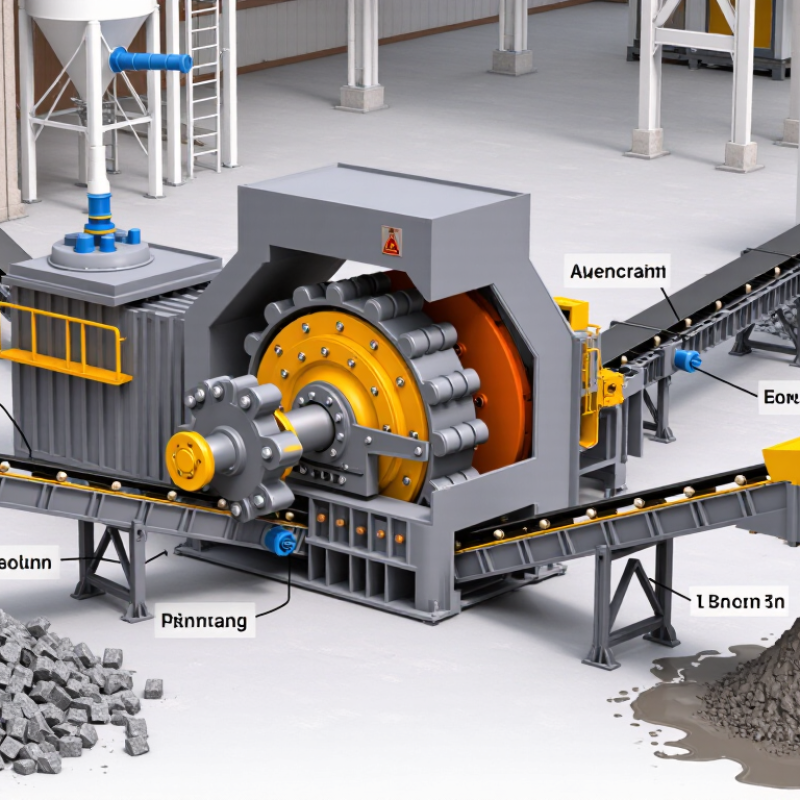
Choosing the best stone hammer crusher starts with the feed, not the catalog. Inside the chamber, a high-speed rotor drives hammers into incoming rock. Impact breaks the stone against breaker plates, and repeated collisions refine the fragments. A grate or adjustable outlet controls the final size. The principle is simple. Different duties need different structures.
A heavy-hammer crusher handles larger feed and may combine primary and secondary reduction. A reversible model rotates in both directions, using both hammer faces before replacement. Ring-hammer designs suit softer, brittle stone. For a quarry receiving 600-millimeter stone and seeking a 20-millimeter product, feed reduction ratio matters. Moist fines can blind the grate. A technician should inspect rotor balance, liner thickness, bearing temperature, and maintenance access. No design wins everywhere.
The USGS Mineral Commodity Summaries 2024 estimates U.S. crushed-stone output at about 1.5 billion metric tons in 2023. The UEPG Annual Review 2023 places European aggregate production near three billion tonnes annually. These figures show why small efficiency losses become expensive at high throughput.
Before selection, test compressive strength, abrasiveness, moisture, maximum feed size, and the target product curve. For silica-rich stone, frequent hammer and liner checks may outweigh a cheaper purchase price. I would still challenge calculations based only on laboratory rock. Quarry faces vary, and damp winter feed can invalidate a neat capacity estimate.
Assessing Material Properties and Required Crushing Capacity
Choosing a stone hammer crusher starts with the feed material, not the machine name. Test compressive strength, moisture, abrasiveness, and maximum lump size. Limestone breaks differently from granite. Wet clay can also block screens and reduce output. In practice, a laboratory test is useful, but a small site trial may reveal troublesome fines. The USGS Mineral Commodity Summaries 2024 estimated U.S. crushed-stone production at about 1.5 billion metric tons in 2023. That scale shows why accurate capacity planning matters.
Required capacity should be measured in tonnes per hour, using the real feed size and target product size. Check the reduction ratio, rotor speed, grate spacing, and continuous operating time. A stated capacity may assume dry, evenly fed stone. Your quarry may not. Allow practical margin for moisture, irregular rock, maintenance, and seasonal changes. A 200-tonne-per-hour target should not mean operating constantly at the machine’s limit. Energy use and wear may rise sharply with harder or more abrasive stone. The U.S. Geological Survey’s data supports market scale, but it does not replace site-specific testing.
Tips: Collect representative samples from different benches. Record moisture after rainfall. Measure the largest rocks, not only the average size. Ask for a test result showing product grading and wear performance. Recheck the estimate after one week of operation. A clean spreadsheet can still hide a bad assumption.
Comparing Crusher Specifications, Performance, and Energy Consumption
How to Choose the Best Stone Hammer Crusher?
Choosing a stone hammer crusher starts with comparing specifications, not appearance. Check the feed opening, rotor diameter, rated power, and maximum stone size. These figures show whether the machine can handle your actual material. A crusher designed for 300-millimeter rock may struggle with wet, abrasive stone. Feed consistency matters too. Irregular feeding can reduce output and increase vibration.
Performance should be measured beside the discharge screen. Compare hourly capacity, product size, crushing ratio, and wear resistance under similar conditions. A narrow discharge setting may produce finer stone, but it can lower throughput and increase energy use. Inspect the wear parts after several shifts. Uneven hammer wear often signals poor feeding or unsuitable stone hardness. I have seen impressive test results fail during daily operation. Laboratory figures are useful, but they need field verification.
Energy consumption deserves a clear calculation. Divide total motor power by actual tons produced, not rated capacity. A 110-kilowatt motor may seem efficient at high output, yet become costly when the feed is intermittent. Look for stable current readings, low empty-running time, and accessible maintenance points. Dust control and noise protection also affect practical efficiency, even when they are missing from technical tables. Keep records for one week. They may expose assumptions that the brochure does not.
How to Choose the Best Stone Hammer Crusher?
Comparison of crusher capacity, installed power, and specific energy consumption
Larger stone hammer crushers generally provide higher throughput, but they also require more installed power. Specific energy consumption tends to decrease as crusher size and operating capacity increase, provided the feed size, material hardness, moisture, and product size remain within the recommended operating range. The figures shown are representative engineering values for comparison and should be verified through site testing before selection.
Selecting the Best Model for Your Site, Budget, and Production Goals
Choosing the best stone hammer crusher starts with the site, not the catalogue. Measure the largest feed stone, moisture, abrasiveness, and required output size. A compact machine may suit a small quarry, but it can struggle with hard, uneven rock. A larger model brings higher purchase and transport costs. It may also waste energy when production demand is modest.
The USGS Mineral Commodity Summaries 2024 estimated U.S. crushed stone production at 1.5 billion metric tons in 2023. This scale shows why matching capacity matters. Do not select a crusher only by its maximum hourly rating. Compare realistic capacity at your desired product size, then check motor power, rotor speed, and wear-part life. The wrong reduction ratio can create excessive fines. That quietly increases screening and material-handling costs.
Budget planning should include installation, electricity, maintenance, spare parts, and downtime. The U.S. Energy Information Administration reports that industrial electricity prices vary widely by region and customer class. Your operating cost may therefore differ sharply from a supplier’s example. Ask for a site-specific test, especially when stone contains quartz or mixed hardness. It is easy to overestimate production during dry trials. A damp feed can change the result. A spreadsheet can still lie. Choose the model that meets your daily target with a reasonable safety margin, not the biggest number on the specification sheet.