
Best EV Motor Controller Manufacturer in China
Electric vehicles are scaling quickly, and their performance depends on more than battery capacity. The International Energy Agency’s Global EV Outlook 2024 reports that nearly 14 million electric cars were sold worldwide in 2023, around 18% of new car sales. China accounted for almost 60% of those sales. That scale makes China an important place to evaluate an EV motor controller manufacturer.
A motor controller, often built around an inverter, regulates electrical power between the battery and motor. Its control strategy affects acceleration, energy use, heat, and drivability. Small details matter: switching behavior under load, cooling near the power module, and stable communication with the vehicle system. A specification sheet is only a starting point. Not enough.
For buyers, comparing manufacturers means checking more than rated voltage or peak power. Ask for continuous-power data, efficiency maps, thermal test conditions, protection features, and validation records. Confirm how the supplier handles design changes, production traceability, and technical support after delivery. These checks help distinguish proven engineering from attractive claims. Still, no single test guarantees performance in every vehicle; integration and operating conditions can change the result. This guide examines the capabilities, evidence, and practical questions that help identify a suitable EV motor controller manufacturer in China.
What an EV Motor Controller Is and How It Works
Best EV Motor Controller Manufacturer in China
An EV motor controller manages the energy flow between the battery and traction motor. In many electric vehicles, it converts the battery’s direct current into controlled alternating current. Fast-switching power transistors shape that output, while control software adjusts motor torque and speed. Sensors report rotor position and temperature, helping the controller respond when a vehicle pulls away or climbs a steep road. The process happens rapidly. A driver feels smooth acceleration, not the switching itself.
The International Energy Agency’s Global EV Outlook 2024 reports nearly 14 million electric car sales in 2023, about 18% of global car sales. That growth makes controller efficiency and thermal management increasingly important. A compact controller still needs to shed heat; a hot casing near a cramped motor bay is a practical warning, not a minor detail. One detail is easy to underestimate: sensor readings and software calibration matter as much as the power hardware. The neat block diagram does not show every real-world compromise.
Tips: Match controller voltage and continuous current ratings to the motor and battery. Check cooling requirements, connector layout, and communication compatibility before installation. Leave a margin for heat. It is easy to overlook.

The Role of Motor Controllers in Electric Vehicle Drivetrains
An electric vehicle motor controller manages the flow of electrical energy between the battery and motor. It reads driver commands, such as accelerator position, then adjusts motor output accordingly. This response shapes acceleration, low-speed control, and regenerative braking. Smooth delivery matters in ordinary moments: pulling away at a junction or climbing a steep parking ramp.
Inside the unit, power switches operate rapidly to regulate current and voltage. Sensors report conditions such as motor position, current, and temperature. The controller uses this feedback to coordinate torque while protecting components from excessive electrical or thermal stress. Small signals matter. A brief delay or rough torque change can affect how the vehicle feels, even when its peak power looks impressive on paper.
Its work also affects efficiency and reliability. Poor thermal design may reduce available output during repeated climbs, while careful calibration can make power delivery more predictable. There are trade-offs: aggressive response may feel lively but can increase energy use or tire slip. It is not magic. For buyers comparing an EV motor controller manufacturer in China, useful questions include how the unit handles heat, communicates with the vehicle, and performs under sustained load. Test results should match the intended motor and operating conditions; a specification sheet alone cannot tell the whole story.
| Drivetrain Function | What the Motor Controller Does | How It Works | Why It Matters When Evaluating a Controller |
|---|---|---|---|
| Power conversion | Converts the battery’s direct-current (DC) power into controlled power for the traction motor. | For common three-phase AC traction motors, an inverter switches semiconductor devices to produce variable-frequency, variable-voltage AC. | Check that the controller’s voltage, current, and power ratings match the battery and motor operating limits. |
| Torque and speed control | Regulates motor torque and speed in response to driver demand and vehicle-control commands. | Control software adjusts motor phase currents using feedback such as rotor position, speed, and current measurements. | Control accuracy and response influence drivability, traction behavior, and the ability to deliver the motor’s intended performance. |
| Regenerative braking | Controls energy flow from the motor back toward the battery during suitable deceleration conditions. | The motor operates as a generator, while the inverter manages the electrical power returned to the DC bus. | Available regenerative braking depends on battery charge acceptance, temperature, vehicle speed, and braking-system coordination. |
| Motor compatibility | Provides switching and control strategies suited to the selected traction-motor type. | Control methods and feedback requirements vary among motor designs, including permanent-magnet synchronous, induction, and switched-reluctance motors. | Confirm supported motor types, sensor requirements, control software, and commissioning options before integration. |
| Thermal management | Monitors and manages heat generated by power semiconductors and other electronic components. | Heat is transferred through the controller’s cooling structure, which may be designed for liquid or air cooling. | Assess cooling requirements, installation conditions, temperature monitoring, and thermal derating behavior for the intended duty cycle. |
| Protection and diagnostics | Detects operating faults and can limit or stop power delivery to help protect the drivetrain. | Typical monitored conditions include overcurrent, overvoltage, undervoltage, and excessive temperature. | Review fault reporting, protective responses, diagnostic access, and how the controller communicates faults to other vehicle systems. |
| Vehicle integration | Exchanges commands and operating data with vehicle control and battery-management systems. | Communication interfaces and control signals support functions such as torque requests, operating status, and fault reporting. | Verify interface compatibility, message definitions, safety behavior, and integration support for the complete vehicle system. |
Note: Controller capabilities and operating limits vary by design. Confirm specifications against the motor, battery, cooling system, and vehicle requirements.
Core Technologies and Performance Specifications
For a leading EV motor controller manufacturer in China, core technology matters more than a polished brochure. The IEA’s Global EV Outlook 2024 reports nearly 14 million electric car sales in 2023, around 18% of total car sales. That growth raises the bar for controller efficiency, thermal stability, and production consistency. Buyers should check the specified DC voltage range, continuous and peak current, motor compatibility, and operating temperature. Peak power alone tells little.
Efficiency needs testing across real driving conditions, not just one ideal operating point. Ask for efficiency maps across speed and torque, plus test conditions and measurement methods. Inspect how the controller manages heat during repeated acceleration and sustained climbs. Look for clear derating limits, overcurrent protection, and torque-response data. CAN communication and diagnostic support also matter on the vehicle line. Small details matter.
A useful specification sheet should separate continuous output from short-duration peak output and state the duration of each rating. It should also describe environmental protection and vibration testing for the intended installation. One weakness in many comparisons is that test setups differ, making headline figures hard to compare. Request test reports and sample-unit validation under your motor, battery voltage, and cooling arrangement. Specs are only a starting point.
Best EV Motor Controller Manufacturer in China: Core Technologies and Performance Specifications
Peak traction-inverter output power varies with vehicle class and system design. The chart shows representative values within common ranges: approximately 100–180 kW for compact vehicles, 150–250 kW for midsize vehicles, and 250–500 kW for performance vehicles. These are illustrative industry benchmarks, not specifications for a particular manufacturer.
China’s EV Motor Controller Manufacturing Landscape
Best EV Motor Controller Manufacturer in China
China’s EV Motor Controller Manufacturing Landscape
China’s motor-controller industry is supported by a large electric-vehicle market and a dense electronics supply chain. The International Energy Agency’s Global EV Outlook 2024 reports nearly 14 million electric car sales worldwide in 2023. China accounted for more than 8 million. That scale encourages investment in inverter assembly, power modules, circuit boards, and thermal management. Scale matters.
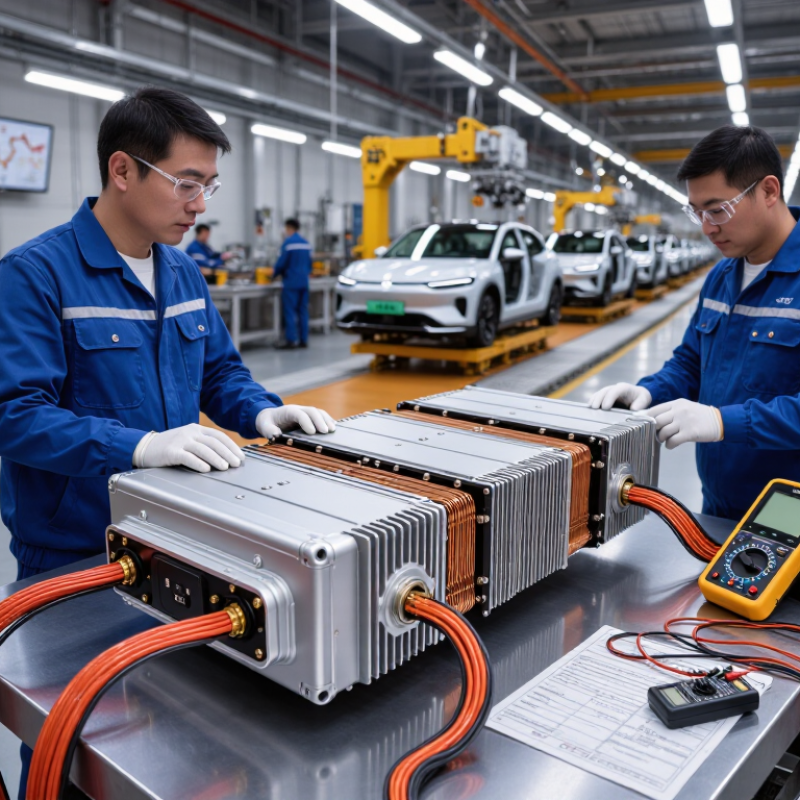
A controller is more than a circuit board in a metal case. Engineers must balance switching efficiency, heat removal, electromagnetic interference, and motor response. On a production line, teams may inspect solder joints, test coolant-channel sealing, and run controllers under changing loads. Small faults can cause costly rework. Reliability needs evidence from repeatable tests, not just a specification sheet.
The landscape is not perfectly uniform. Supplier capabilities, validation depth, and component sourcing can differ between factories. IEA sales figures describe the vehicle market, not controller output, so they should not be treated as direct proof of manufacturing quality. Buyers should ask for test methods, traceability records, and data from hot, cold, and vibration testing. A high-volume factory may still need to improve its documentation. That deserves a closer look.
How to Evaluate EV Motor Controller Manufacturers in China
Best EV Motor Controller Manufacturer in China
How to Evaluate EV Motor Controller Manufacturers in China
Evaluating an EV motor controller manufacturer in China starts with your vehicle’s real operating conditions, not its headline power rating. Share the motor type, battery voltage, peak current, and expected duty cycle. Ask how the controller handles heat during repeated acceleration or long climbs. Check thermal derating data, cooling requirements, and protection behavior. Numbers matter, but test conditions matter too.
Request technical documentation, sample test reports, and details about communication protocols such as CAN. Confirm that the controller can work with your motor and vehicle control system. Ask how the manufacturer checks wiring, sealing, vibration resistance, and electromagnetic compatibility. A clear answer should include test methods and limits, not just “passed.” A brochure is only a starting point.
Factory quality systems and after-sales support deserve close attention. Ask how production batches are traced, how defects are recorded, and what support is available during integration. A sample unit can reveal connector layout or software issues that a meeting may miss. I would not judge a supplier from one visit or one polished presentation; that is an imperfect measure. Compare evidence across samples, documents, and technical discussions, and note where answers remain uncertain.

