Who Is the Best Metal Film Capacitor Manufacturer in China?
Choosing the best Metal Film Capacitor manufacturer in China takes more than comparing prices or browsing product photos. A dependable supplier should provide clear specifications, consistent quality, and evidence to support its claims. Small details matter: capacitance tolerance, rated voltage, temperature range, lead spacing, and packaging can all affect how a component performs in your design.
A careful comparison begins with the application. A capacitor used in a compact control board may face different demands from one used in audio equipment or industrial electronics. Ask for a current datasheet, sample quantities, inspection procedures, and relevant test records. Check whether the manufacturer can explain how it manages raw materials, production changes, and quality checks. Specific answers are more useful than broad promises. That sounds simple. It is not.
This guide explores how to assess Chinese manufacturers using practical, verifiable criteria, rather than declaring a winner based on marketing claims alone. It also considers communication, customization, delivery consistency, and after-sales support. These factors can be difficult to judge from a website, so sample evaluation and direct technical questions are important. No single checklist catches everything. Buyers should confirm that the supplied part matches the approved specification and intended operating conditions. A promising price may still come with trade-offs, and not every supplier will fit every project. The best choice is the manufacturer whose capabilities, documentation, and service match your requirements—and whose claims hold up when checked.
What Are Metal Film Capacitors and Where Are They Used?
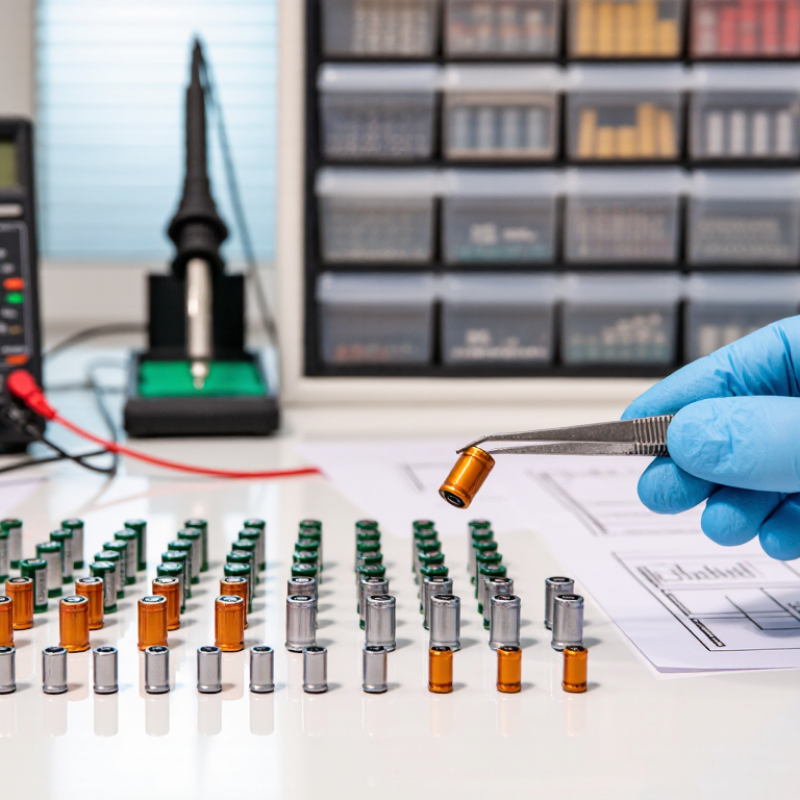
Metal film capacitors use a thin plastic film as the dielectric, with a very fine metal layer forming the electrodes. The film is commonly wound into a compact roll and sealed inside a plastic or metal case. These parts are valued for stable capacitance, low energy loss, and reliable performance in many circuits. They are not all alike. Film material, voltage rating, temperature range, and construction affect how a capacitor behaves.
You can find them in audio equipment, power supplies, lighting circuits, motor controls, and industrial electronics. In a speaker crossover, for example, a capacitor may help direct different frequencies to the correct speaker. In a power supply, it can smooth voltage or absorb brief electrical pulses. Some designs also work in timing and signal circuits. A useful detail: a capacitor’s printed rating does not guarantee the same performance under every temperature or operating condition. Small parts matter.
Tips: Match capacitance and voltage ratings to the circuit, then check the manufacturer’s temperature and pulse specifications. Leave suitable space for heat and observe polarity-free installation only when the circuit design allows it. For high-frequency or high-current use, confirm the part’s loss and ripple limits. A familiar rating can look reassuring, but checking the actual operating conditions is still worthwhile.
How Is China’s Metal Film Capacitor Industry Structured?
China’s metalized film capacitor industry is a layered supply chain, not a single factory business. Upstream suppliers provide polypropylene or polyester film, metal coating, resin, and packaging materials. Converters then metallize, slit, wind, heat-treat, and assemble the film into capacitors. Testing capacity matters: capacitance, insulation resistance, and pulse performance can vary with winding tension and coating uniformity.
Production is concentrated among component makers serving industrial controls, power electronics, home appliances, and automotive systems. Some factories focus on high-volume standard parts; others build custom capacitors for demanding temperatures or compact designs. The distinction is practical. A neatly wound roll and stable end spray often matter more than a large catalogue. Yet supplier depth and process consistency are not always visible in a quotation.
Grand View Research estimated the global film capacitor market at about US$2.1 billion in 2023, with projected growth through 2030. That figure covers film capacitors worldwide, not China alone, and market definitions differ across reports. It signals a substantial, expanding component category, but does not reveal how much value Chinese producers capture. That gap deserves attention. A careful buyer should compare test methods, batch traceability, and long-term failure data, rather than treating capacity claims as proof of reliability.
What Criteria Define a Leading Chinese Manufacturer?
A leading Chinese metal film capacitor manufacturer should prove performance with repeatable measurements, not polished claims. Ask for test data covering capacitance tolerance, dissipation factor, insulation resistance, and temperature rise. For power applications, impulse-current capability and self-healing behavior also matter. Small details count.
Look closely at process control. Consistent film thickness, clean winding, secure end-spray connections, and controlled resin curing can affect reliability. A capable supplier should explain how it checks these steps and trace a finished batch back to its materials and production records. Request sample reports, test conditions, and clear acceptance limits. Numbers without context are hard to judge.
Service matters too. Does the engineering team review operating voltage, ambient temperature, switching frequency, and expected lifetime before recommending a part? Ask how the product performs after humidity and thermal cycling, and whether results come from internal or independent testing. A tidy datasheet is useful, but it cannot answer every field question. No single metric tells the whole story. Even a strong manufacturer may have gaps; openly documented limitations are more credible than perfect-sounding promises.
How Do Manufacturers Compare in Technology, Quality, and Capacity?
A strong metal film capacitor manufacturer should prove its capability in three areas: process control, product consistency, and dependable production capacity. Technology matters at the winding line: precise film tension and clean electrode edges help reduce wrinkles and weak spots. Ask how suppliers control raw-material batches, test capacitance and dissipation factor, and track failures after accelerated aging. IEC 60384-16 provides a relevant specification for metallized polypropylene film capacitors. Still, a certificate alone does not show how consistently a factory meets it.
Tips: Request recent test records, not only a capability brochure. Ask for monthly output, actual utilization, lead times, and backup plans for key materials. Numbers need context.
Market growth raises the stakes, but it is not proof of any supplier’s quality. Fortune Business Insights valued the global capacitor market at USD 22.29 billion in 2023 and projected USD 35.55 billion by 2032, a 5.3% compound annual growth rate. This broad market figure includes capacitor types beyond film products. One limitation: public reports rarely disclose comparable, audited capacity figures for individual Chinese film-capacitor plants. Compare factories directly using sample test results, audit findings, defect trends, and delivery history. A neat sample is not enough. Check whether production lots match it.
How Can Buyers Choose the Best Manufacturer for Their Needs?
Choosing a metal film capacitor manufacturer starts with the circuit, not a sales ranking. Record capacitance, rated voltage, tolerance, operating temperature, and ripple or pulse demands. These details help reveal whether a supplier understands your actual application. Ask which film dielectric and construction they offer, then check dimensions and lead spacing against your board. Small mismatches can slow assembly. A neat catalogue is useful, but it is not proof of consistent production.
Request a sample and inspect it under realistic conditions. Compare measured capacitance and dissipation factor with the datasheet, and ask for test methods, traceability, and change-control procedures. A reliable manufacturer should explain how it handles batch variation and investigates failures. Look for clear answers, not just a low quotation. Very low minimum orders may help a pilot run, while larger projects need evidence of stable capacity and delivery. No checklist catches everything. I would also compare response times and technical support; one unanswered question during qualification can become a costly delay later. Even a good supplier may have limits, so confirm them before committing.