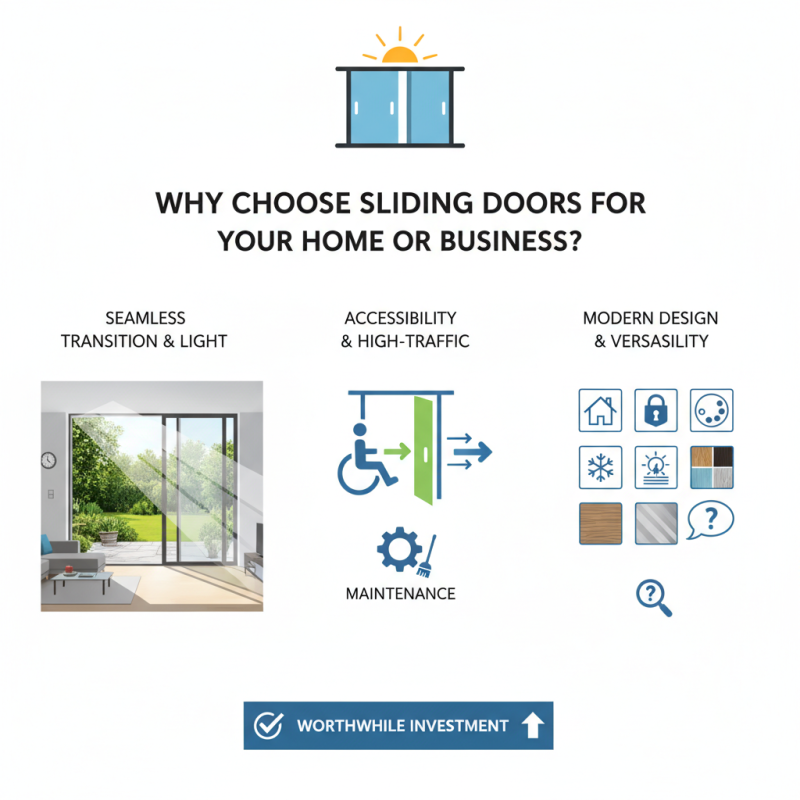
Why Choose Sliding Doors for Your Home or Business?
When considering a functional yet stylish entrance, Sliding Doors stand out. These doors create seamless transitions between indoor and outdoor spaces. They enhance natural light, making rooms feel larger and more open. Choosing sliding doors for your home or business can transform your environment.
Sliding doors also provide accessibility. They are great for both residential and commercial spaces. The smooth operation is ideal for high-traffic areas. However, their design can raise issues if not maintained properly. Regular cleaning and upkeep are necessary. Otherwise, dust and dirt can hinder their function.
Incorporating sliding doors can add a modern touch. They come in various styles and materials, suiting any decor. However, this versatility can be overwhelming. Finding the perfect choice may take time. Consider factors like space, security, and climate. A thoughtful selection will ensure your investment is worthwhile.
Benefits of Sliding Doors for Space Optimization
Sliding doors offer an innovative solution for space optimization in both homes and businesses. These doors glide open, eliminating the need for a swinging arc. This design feature frees up valuable floor space. In tight areas, this can make a significant difference, allowing for smoother movement and better flow.
Beyond just saving space, sliding doors enhance natural light. They often consist of large glass panels. This brightness can make a room feel more spacious and inviting. However, not all sliding doors are created equal. Some may have seals that wear out quickly, impacting energy efficiency. It’s essential to choose wisely to ensure longevity and performance.
Another benefit lies in accessibility. Sliding doors are easier to open for people of all ages. They can be particularly useful for wheelchairs or heavy items. However, they may require regular maintenance to function smoothly. Cleaning the tracks and ensuring they are free of debris is crucial. In some instances, sliding doors may also restrict furniture placement. This can limit design options, requiring thoughtful consideration during installation.
Why Choose Sliding Doors for Your Home or Business? - Benefits of Sliding Doors for Space Optimization
| Benefit | Description | Ideal Usage |
| Space Saving | Sliding doors do not swing open, making them ideal for tight spaces. | Apartments, small offices |
| Natural Light | Large glass panels increase natural light in a room. | Living rooms, patios |
| Accessibility | Easier for individuals with mobility issues to navigate through. | Homes, businesses with high foot traffic |
| Aesthetic Appeal | They provide a modern and stylish look to any space. | High-end homes, commercial spaces |
| Versatility | Can be used for interior and exterior applications. | Offices, divided spaces in homes |
Enhancing Natural Light and Ventilation with Sliding Doors
Sliding doors are an excellent choice for both homes and businesses, particularly when enhancing natural light and ventilation. A study showed that spaces filled with natural light can improve productivity by up to 20%. This is crucial for workplaces aiming to maximize employee efficiency. Sliding doors can be designed to cover large openings, allowing more sunlight to flood interiors. Natural light has also been linked to better overall mood and well-being.
In addition to aesthetics, sliding doors significantly improve ventilation. Many modern designs incorporate screens that allow fresh air to flow freely while keeping insects outside. A report indicated that proper ventilation can reduce indoor air pollutants, benefitting health. For residential settings, this is vital as families spend more time indoors.
However, installing sliding doors does require proper planning. Some buildings may require structural adjustments, which can complicate installation. Also, not all sliding doors are equally energy-efficient, so it's essential to consider materials and insulation. Balancing style with performance is crucial for long-term satisfaction.
Impact of Sliding Doors on Natural Light and Ventilation
Design Versatility: Sliding Doors for Various Aesthetics
Sliding doors bring a unique design versatility to any space. They can complement various aesthetics, whether modern, rustic, or industrial. Their sleek frames can elevate contemporary settings, while wooden designs add warmth to cozy interiors. Different materials allow homeowners and business owners to choose sliding doors that reflect their personal style.
One often overlooked aspect is the functional benefits. Sliding doors save space, making them ideal for tight areas. This feature is especially useful in smaller homes or bustling offices. However, the choice of sliding doors requires careful consideration. Selection should focus not only on looks but also on practical usage. Poorly installed or chosen doors can lead to operational issues and frustrations.
Finding the right balance between function and form is essential. Poor lighting can diminish the beauty of sliding doors. It’s critical to think about how they interact with the existing architecture. Proper maintenance is also important for longevity. Dust and dirt can accumulate in tracks, affecting movement over time. Taking time to regularly clean these areas can ensure smooth operation.
Improving Accessibility and Convenience with Sliding Doors
Sliding doors have gained popularity in both homes and businesses. They offer remarkable accessibility benefits. For those with mobility challenges, sliding doors provide an easier passage. The absence of a swinging arc means no tripping hazards. This is crucial in high-traffic areas.
In addition to being practical, sliding doors enhance convenience. They allow for seamless transitions between spaces. You can easily move between the indoors and outdoors. This fluidity can transform small areas, making them feel larger. The design also promotes natural light. Sunlight can flow freely into a room, creating a warm atmosphere.
However, not every sliding door is perfect. Maintenance can be a concern. Tracks may accumulate dirt, making movement less smooth. Regular cleaning and inspections are necessary. Also, if not installed properly, doors may stick or become misaligned. This can frustrate daily use. Ultimately, sliding doors combine style with functionality. They can significantly improve accessibility, though it's essential to weigh the strengths against the drawbacks.
Energy Efficiency Considerations for Sliding Door Installations
Sliding doors have gained popularity in both residential and commercial settings, particularly for their energy efficiency. According to the U.S. Department of Energy, sliding glass doors can significantly reduce heating costs. Homes with ENERGY STAR-rated sliding doors can save up to 30% on energy bills. This is especially true in regions with fluctuating temperatures, where good insulation is essential.
However, not all sliding doors are created equal when it comes to energy efficiency. Installation quality plays a crucial role. A poorly installed door may lead to drafts, undermining its efficiency. Furthermore, the choice of materials can make a big difference. Double-glazed doors, for example, can provide much better insulation than single-pane options. Homeowners must also consider solar heat gain and how it affects their heating and cooling costs.
Moreover, the orientation of sliding doors can impact energy use over the year. Doors facing the sun may increase cooling costs in the summer if not properly shaded. A careful assessment of these factors can lead to a more energy-efficient home or business. It’s essential to weigh the specific conditions of your space when opting for sliding doors. This thoughtful approach can help ensure enhanced comfort and lower energy expenses over time.