
5 Tips for Choosing PE Coloring Masterbatch?
Choosing the right Pe Coloring Masterbatch can decide whether a plastic product looks premium or inconsistent. A slight shade shift may appear beside a retail shelf light. It can also signal poor process control. Industry reports support this concern. Grand View Research’s Masterbatch Market Size, Share & Trends Analysis Report identifies growing demand for customized colors, stable processing, and improved polymer performance. Smithers’ The Future of Masterbatch to 2028 also highlights quality consistency, sustainability, and application-specific formulation as major purchasing factors.
The decision should begin with the final product, not the color sample alone. Check the polyethylene grade, processing temperature, dosage rate, and required opacity. A masterbatch that performs well in film may behave differently in injection molding. Ask suppliers for dispersion data, migration information, weathering results, and batch-to-batch color tolerances. ASTM D2244 can support objective color difference measurements, while ASTM D638 may help evaluate tensile performance after pigmentation. Small tests matter.
Do not trust appearance alone.
Experienced processors often run a controlled trial using the actual resin, equipment, and production speed. Watch for pigment streaks, die buildup, surface spots, and unexpected melt-flow changes. Cost per kilogram can mislead you. Cost per finished part is more useful. Yet, no checklist removes every risk. Some supplier data may reflect ideal laboratory conditions, rather than a dusty factory floor or recycled polyethylene feedstock. That limitation deserves honest review. The five tips ahead connect technical evidence, supplier reliability, regulatory awareness, and practical production experience.
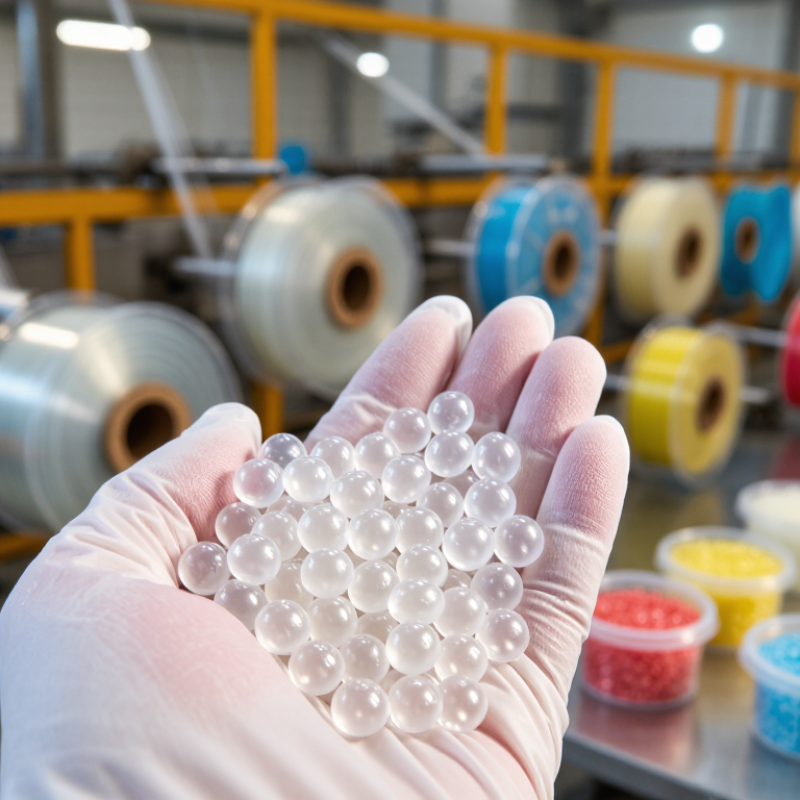
Define the PE Resin Type and Processing Conditions
Choosing PE coloring masterbatch starts with identifying the exact resin, not just the desired color. HDPE, LDPE, and LLDPE differ in melt strength, crystallinity, and flow behavior. A carrier that disperses well in one grade may create specks in another. Check the resin datasheet, melt flow rate, and intended end use. Do not rely on a generic recommendation alone. Small differences matter.
Match the masterbatch to the processing method: film extrusion, injection molding, blow molding, pipe extrusion, or rotational molding. Record barrel temperatures, screw speed, back pressure, and residence time. High shear can improve pigment dispersion, but excessive heat may damage additives or cause shade drift. For thin film, test blocking, haze, and tensile performance. For molded parts, inspect weld lines and surface gloss. A color chip helps, but it cannot replace a production trial.
Use a controlled let-down ratio and compare samples from the beginning, middle, and end of the run. This can reveal settling, feeder variation, or incomplete mixing. Keep the same resin lot during testing when possible. I have seen teams blame pigment quality when unstable feeding caused the real problem. It is an easy mistake. Review the process before changing the colorant.

5 Tips for Choosing PE Coloring Masterbatch: Define the PE Resin Type and Processing Conditions
Typical melt-processing temperature windows for common polyethylene resin types
PE resin types have different melt-processing windows. LDPE generally processes at lower temperatures, while LLDPE and HDPE typically require higher temperatures. Select a masterbatch with a compatible PE carrier, strong pigment dispersion, and thermal stability suitable for the actual processing temperature. Always confirm the recommended range with the specific resin and masterbatch technical data sheet.
Check Pigment Performance, Color Strength, and Dispersion
5 Tips for Choosing PE Coloring Masterbatch
Check pigment performance before admiring the color chip. Polyethylene processing can expose pigments to heat, shear, and outdoor light. Ask for heat-stability and weathering data at your actual processing temperature. A laboratory report should show measurable color change, not only attractive photographs. ISO 10526 and ASTM D2244 methods can support objective color evaluation. For outdoor PE products, request accelerated-weathering results and migration information. A pigment that performs well in short trials may still fade later.
Color strength affects dosage, cost, and consistency. Compare concentrates at the same let-down ratio. Measure L*, a*, and b* values with a calibrated spectrophotometer. Do not trust visual judgment alone. According to a 2024 Smithers industry outlook, the global masterbatch market is expected to grow by roughly 5% annually through 2028. That growth increases pressure for efficient, reliable concentrates. Strong pigment loading can reduce material use, but excessive loading may damage dispersion. This trade-off is often missed.
Dispersion deserves a practical test. Mix the masterbatch with your production-grade PE, then inspect a thin film under magnification. ASTM D5596 or ISO 23900-5 can help assess pigment distribution. Look for specks, streaks, and uneven patches. Poor dispersion can create weak points and unstable color. Check compatibility with recycled PE too. Its melt flow and contamination levels may vary. One trial is not enough. I would repeat testing after storage and production downtime, because real factories are rarely perfect.
Match the Masterbatch Carrier with the PE Material
5 Tips for Choosing PE Coloring Masterbatch
Match the Masterbatch Carrier with the PE Material
Polyethylene is not one uniform material. HDPE, LDPE, and LLDPE differ in density, melt flow, and processing behavior. The carrier should closely match the target resin. A PE carrier usually disperses more reliably than an unrelated polymer carrier. This matters during extrusion, film blowing, and injection molding.
Check the melt flow rate before approving a color concentrate. A carrier with very different flow may create streaks, die build-up, or uneven gloss. Also compare processing temperatures. A carrier that softens too early can distort feeding. One that melts too late may leave specks. Small trial batches reveal these problems quickly. I have found that a clear plaque can hide defects that become obvious in a blown film.
PlasticsEurope’s Plastics—The Fast Facts 2024 reports global plastics production at 413.8 million tonnes in 2023. Such scale makes material efficiency important, but color loading should never replace compatibility testing. The OECD Global Plastics Outlook estimates that only about 9% of plastic waste was recycled globally in 2019. Recycled PE can vary considerably. Its odor, moisture, melt flow, and previous additives may change the result. Test the masterbatch in the actual recycled grade, not only in virgin resin. Review pigment heat stability, let-down ratio, and final mechanical properties. The “best” carrier may still fail when the resin changes.
Evaluate Additives, Safety Standards, and End-Use Requirements
Tip 1: Evaluate the additive package, not only the color. A reliable PE coloring masterbatch should disperse evenly and remain compatible with the selected polyethylene grade. Ask about carriers, waxes, stabilizers, and processing aids. Excess additives may cause plate-out, odor, brittleness, or poor sealing. Test it under your real extrusion temperature.
Tip 2: Check safety documentation and applicable standards. Request a technical data sheet, safety data sheet, and batch traceability records. For packaging, confirm whether the formulation suits the intended food-contact or other regulated application. Compliance depends on the destination market and end use. Do not guess. I once saw a bright color pass a visual check but fail an odor test after molding.
Tip 3: Match performance to the finished product. Outdoor pipes may need stronger weathering resistance, while agricultural film requires stable color during long sunlight exposure. Containers may prioritize migration control, while toys often need clean appearance and impact performance. Define dosage, melt flow, surface finish, and recycling conditions before approval. Keep records.
A small trial is essential. Measure color difference, dispersion, mechanical strength, and processing stability across several batches. Laboratory results can still miss factory realities, especially when moisture, shear, or recycled content changes. That uncertainty deserves attention. Review the results with experienced processing and quality teams before full-scale production.
5 Tips for Choosing PE Coloring Masterbatch? – Evaluate Additives, Safety Standards, and End-Use Requirements
| No. | Selection Tip | What to Evaluate | Recommended Criteria | Relevant Standards or Tests | End-Use Impact |
|---|---|---|---|---|---|
| 1 | Match the PE Carrier | Check whether the carrier is low-density polyethylene (LDPE), linear low-density polyethylene (LLDPE), high-density polyethylene (HDPE), or a compatible polyethylene blend. | Select a carrier with similar melt behavior and processing temperature to the base resin. Confirm melt flow rate, dispersion, and compatibility before production. | Compare melt mass-flow rate using ISO 1133-1 or ASTM D1238. Check color dispersion and filter-pressure behavior during extrusion. | Film, injection-molded parts, blow-molded containers, and pipes may require different flow characteristics and pigment concentrations. |
| 2 | Evaluate Pigments and Additives | Review pigment chemistry, light stability, heat resistance, migration behavior, dispersing agents, antioxidants, slip agents, and UV stabilizers. | Use pigments that remain stable at the processing temperature and do not adversely affect odor, mechanical properties, transparency, or surface appearance. | Request technical data for heat stability, weathering, migration, heavy-metal content, and additive compatibility. Use ISO 4892-2 or ASTM G154 when accelerated weathering is required. | Outdoor products need strong light and weather resistance. Thin films may require low-plate-out formulations, while packaging may require low odor and low migration. |
| 3 | Verify Safety and Regulatory Status | Determine whether the colored product will contact food, drinking water, toys, medical products, electrical equipment, or general consumer goods. | Obtain a current declaration of compliance, restricted-substance statement, safety data sheet, and supporting migration or extraction information where applicable. | Depending on the market, review FDA requirements such as 21 CFR 177.1520, EU food-contact rules including Regulation (EU) No 10/2011, REACH restrictions, and RoHS requirements for electrical and electronic applications. | A formulation suitable for general industrial use may not be suitable for food contact, toys, medical packaging, or potable-water applications. |
| 4 | Confirm Dosage and Processing Window | Check the recommended let-down ratio, pigment loading, screw design, residence time, drying needs, and processing temperature. | Begin with the supplier's validated dosage and adjust through trials. A common trial range is approximately 1–5% masterbatch, but the correct level depends on color strength, opacity, and application. | Measure color difference with a spectrophotometer using CIE L*a*b* values and ΔE. Check tensile strength, elongation, impact, and dimensional stability using the applicable ASTM or ISO methods. | Excessive dosage can increase cost, alter melt flow, reduce mechanical performance, or create surface defects. Insufficient dosage can cause weak coverage and shade variation. |
| 5 | Test for the Final Application | Assess appearance, color consistency, opacity, surface quality, odor, migration, weatherability, and long-term mechanical performance in the actual product design. | Run trials on the intended machine and resin grade. Test samples after aging, washing, sterilization, UV exposure, or chemical contact when these conditions are expected in service. | Use application-specific testing, such as tensile testing under ISO 527 or ASTM D638, impact testing under ISO 180 or ASTM D256, and relevant food-contact, weathering, or chemical-resistance protocols. | Film and packaging prioritize dispersion, sealability, and migration. Outdoor products prioritize UV stability. Rigid molded parts prioritize impact strength, gloss, shrinkage, and dimensional consistency. |
Compare Quality Consistency, Compatibility, and Total Cost
5 Tips for Choosing PE Coloring Masterbatch
Polyethylene is not a minor material. PlasticsEurope’s Plastics—The Fast Facts 2023 reports that PE represented about 30% of global plastics production in 2022. Start by checking color consistency across production lots. Request pigment-strength data, Delta E values, moisture, ash, and melt-flow rate. A bright sample proves little. Test pellets from several batches under your actual processing temperature.
Compatibility deserves equal attention. The carrier should match your PE grade, additive package, and processing method. Poor compatibility can cause specks, plate-out, weak weld lines, or unstable film appearance. Compare dispersion after extrusion, not only in a laboratory plaque. The OECD’s Global Plastics Outlook reported that only 9% of plastic waste was recycled in 2019, so avoid additives that unnecessarily complicate future recycling streams. This needs careful verification.
Total cost is more than the price per kilogram. Calculate let-down ratio, dosing accuracy, purge waste, rejected parts, energy use, and downtime. A concentrated masterbatch may cost more initially, yet reduce storage and handling. Ask for technical data, batch traceability, and production references. Run a controlled trial on your own machine. Small flaws often appear there. I have seen a cheaper pellet create expensive color corrections. Still, one successful trial cannot represent every shift. Recheck shade, melt flow, and surface quality after extended production. Cite test methods such as ISO 1133-1 for melt-flow rate and ASTM D2244 for color difference.

